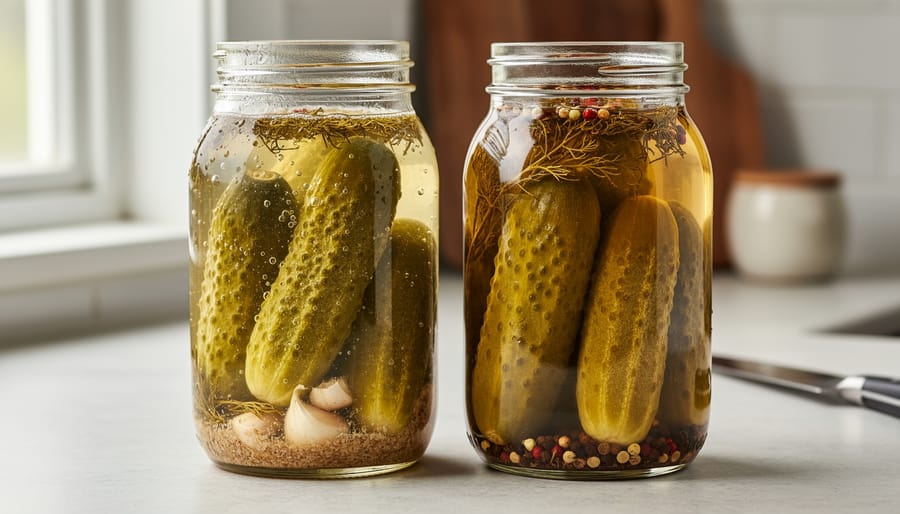
Are pickles fermented? The answer depends on which jar you pick up. Some pickles are naturally fermented through a centuries-old process that uses salt, time, and beneficial bacteria, while others skip fermentation entirely and rely on vinegar for that signature tang.
Understanding the difference matters if you care about probiotics, flavor complexity, or reducing food waste in your kitchen. Fermented pickles contain live Lactobacillus cultures that support gut health and develop deep, nuanced flavors over days or weeks. Quick-process pickles, the kind most Canadians find on grocery store shelves, are simply cucumbers soaked in vinegar brine and ready within hours. Same crunch, different biology.
The distinction isn’t just academic. If you’re experimenting with preserving excess garden cucumbers or farmers’ market hauls, knowing which method you’re using changes everything from storage to nutritional value. Fermented pickles need only salt, water, and patience. Vinegar pickles require heat processing and shelf-stable jars. Both have a place in sustainable cooking, but they’re built through completely different processes.
This guide breaks down how fermentation actually works, how to spot truly fermented pickles in stores, and why the method you choose affects more than just taste. Whether you’re curious about probiotic claims or looking to make better use of seasonal produce, you’ll walk away knowing exactly what’s happening inside that pickle jar.
What Fermented Pickles Actually Are
Fermented pickles are cucumbers preserved through a natural process where beneficial bacteria ferment the vegetable’s own sugars. No vinegar enters the equation. Instead, you’re harnessing microscopic life that’s already present on the cucumber skin and in your kitchen.
Here’s how it works: you submerge cucumbers in a simple salt brine, usually around 2% salt by weight. The salt creates conditions that favor good bacteria while blocking harmful microbes. Over 3 to 12 days, depending on temperature and cucumber size, these bacteria get to work converting natural sugars into lactic acid. That acid gives fermented pickles their signature tang and preserves them safely for months in your fridge.
- Fermentation
- A natural preservation process where microorganisms break down sugars in food, creating beneficial compounds and extending shelf life without added vinegar or heat processing.
- Lactic Acid
- The tangy compound produced when beneficial bacteria convert sugars during fermentation. It’s what gives naturally fermented pickles their complex, slightly sour flavor and acts as a natural preservative.
- Probiotics
- Live beneficial bacteria that survive the fermentation process and can support digestive health when you eat fermented foods. They’re only present in truly fermented pickles, not quick-pickled versions.
- Lactobacillus
- The primary family of bacteria responsible for fermenting pickles. These microbes occur naturally on vegetables and thrive in salty environments, producing lactic acid as they work.
The transformation happens at room temperature, though cooler conditions slow things down. Traditional processing at around 17°C can take 11 to 12 days for larger cucumbers. The result is a pickle packed with live cultures that continues to develop flavor over time, unlike the vinegar-based versions that stay pretty much the same from the day they’re jarred.
How Pickle Fermentation Works
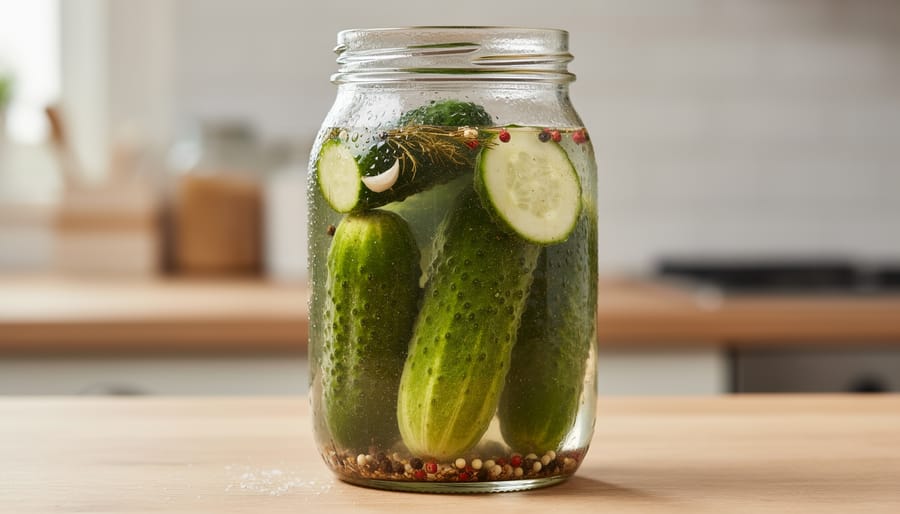
The magic of pickle fermentation starts with just three things: cucumbers, salt, and time. When you submerge fresh cucumbers in a salt brine, typically a 2% solution, which means about 20 grams of salt per litre of water, you create an environment where beneficial bacteria can thrive while harmful microbes can’t survive.
Here’s what happens under the surface. Cucumbers naturally carry Lactobacillus bacteria on their skin. When you add salt brine, these bacteria get to work converting the natural sugars in the cucumbers into lactic acid. This acid does two jobs: it preserves the pickles and gives them that characteristic tangy flavour. The process is entirely natural. No vinegar, no heat processing, no shortcuts.
Temperature and time determine how quickly this transformation happens. Traditional fermented pickle processing can take 11 to 12 days at around 17°C for large cucumbers. Smaller vegetables ferment faster, sometimes in 3 to 7 days. Warmer conditions speed things up, while cooler temperatures slow the process down and often produce crisper results.
You’ll know fermentation is working when you see small bubbles rising in the brine. That’s carbon dioxide, a byproduct of the bacterial activity. The brine may turn cloudy, that’s normal and actually a good sign. Over days, the colour of the cucumbers shifts from bright green to a more olive or yellow-green shade as the lactic acid changes the vegetable’s chemistry.
The beauty of this method is its simplicity. Ancient preservers figured out centuries ago that salt, patience, and the right conditions were all they needed to turn a glut of summer cucumbers into food that would last months. The same process works today in your kitchen, transforming fresh vegetables into probiotic-rich pickles without special equipment or additives.
Fermented vs. Non-Fermented Pickles: Know What You’re Buying
Fermented (Naturally Brined) Pickles
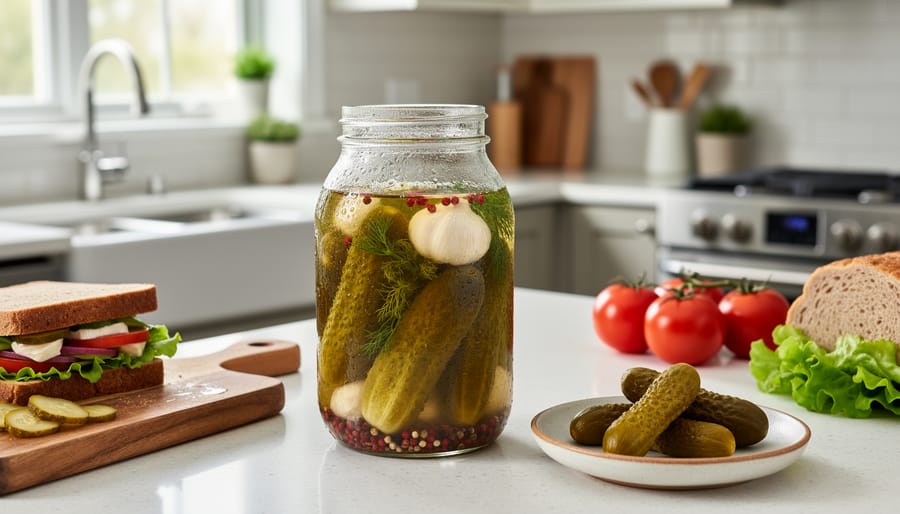
Fermented pickles spend days or weeks transforming in a simple salt brine, where beneficial bacteria work steadily to build flavor and probiotics. You’ll find them in the refrigerated section of the grocery store because those live cultures are still active, they need to stay cold. Unlike shelf-stable pickles made with vinegar, these versions use only salt, water, spices, and time. The bacteria (mainly Lactobacillus strains) consume the cucumbers’ natural sugars and produce lactic acid, which gives fermented pickles their characteristic deep, tangy complexity that’s different from the sharp vinegar bite of quick-process is not fermented varieties.
The timeline varies with temperature and cucumber size, smaller pickles might be ready in three days, while larger ones can take up to two weeks. At typical fermentation temperatures, most home batches finish within a week. During that time, the brine turns cloudy and develops bubbles, both signs of active fermentation. When you open a jar, you’ll notice a mild fizz and a layered sourness that builds as you chew, rather than hitting you all at once. That complexity, along with the gut-friendly bacteria, is what sets naturally fermented pickles apart.
Fresh-Pack or Quick-Process Pickles
Quick pickles are the kind most of us grew up with, the jars lining grocery store shelves at room temperature. These pickles skip fermentation entirely. Instead, cucumbers get a brief soak in salt brine (sometimes just a few hours, occasionally overnight) to pull out excess moisture and firm up the texture. Then they’re drained and packed into jars with vinegar, sugar, and spices.
The vinegar does all the preserving work here, creating an acidic environment that keeps the pickles shelf-stable for months without refrigeration. No beneficial bacteria ever get involved, which means no probiotics develop. The process is fast, manufacturers can turn out batches in days rather than weeks, making these pickles cheaper and easier to produce at scale.
You’ll recognize quick-process pickles by where they sit in the store and what’s on the label. They’re shelf-stable until opened, the ingredient list leads with vinegar, and they often contain preservatives like calcium chloride or polysorbate 80. The flavor is sharper and more one-dimensional, pure vinegar tang without the layered complexity fermentation brings. For many recipes and sandwiches, that bright acidity is exactly what you want. Just don’t expect gut-health benefits from the jar.
Why the Difference Matters
Understanding whether your pickles are fermented affects three practical areas: what they do for your health, how they taste, and how long they’ll last in your kitchen.
The health angle is straightforward. Only naturally fermented pickles contain live probiotics, those beneficial bacteria that support your gut microbiome. Quick-process pickles might taste pickled, but the vinegar method skips fermentation entirely, so you’re not getting those microbes. If you’re choosing pickles for gut health, the production method matters.
Taste differs too. Fermented pickles develop a layered, complex tang over days or weeks as bacteria work through the cucumbers. Quick pickles deliver a sharp vinegar bite that’s one-note by comparison. Neither is wrong, but they’re different flavors serving different purposes.
From a waste-reduction perspective, fermented pickles earn their keep. Once fermented, they stay good in your fridge for months, the acidic environment they create preserves them naturally. That extended shelf life means fewer jars going bad before you finish them, which aligns with smarter food management. Quick pickles are shelf-stable until opened, but once the jar’s cracked, they don’t last as long under refrigeration.
Knowing the difference lets you match the pickle to your goal, whether that’s supporting your microbiome, getting a specific flavor, or keeping food waste down.
Using Fermented Pickles to Cut Food Waste
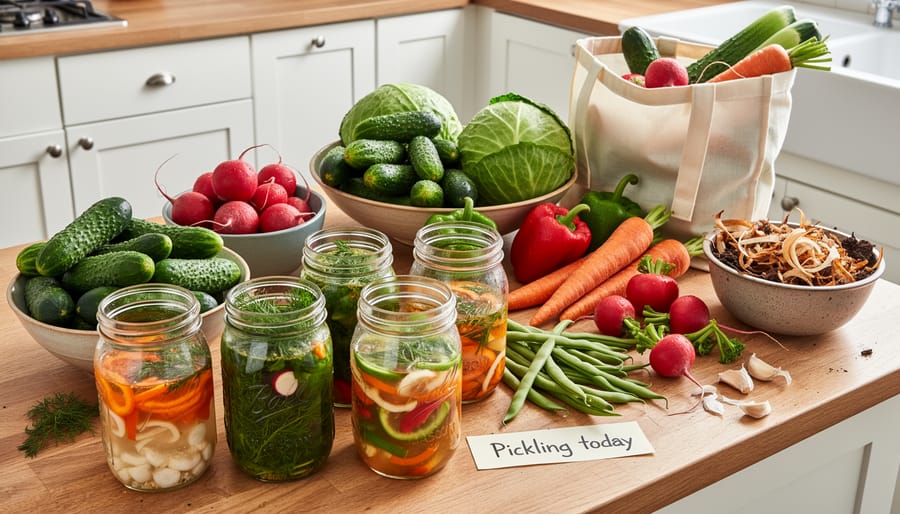
Fermentation turns surplus produce into a practical asset instead of compost. When your garden overproduces cucumbers in August or you find a great deal at the farmers market, making fermented pickles locks in that seasonal bounty for months. The process preserves vegetables at their peak while building beneficial probiotics, no energy-intensive canning equipment needed, just salt, water, and time.
A basic 2% salt brine creates the right environment for Lactobacillus bacteria to do their work. This means you can transform a glut of cucumbers into shelf-stable food with minimal effort and zero waste. The same approach works for many vegetables that might otherwise go unused:
- Carrots that are starting to soften
- Green beans from a bumper crop
- Cauliflower or radishes nearing their prime
- Bell peppers with minor blemishes
- Cabbage leaves from making slaw
Each jar you ferment replaces a packaged product you’d otherwise buy, cutting both household waste and the environmental cost of commercial processing and shipping. Fermented vegetables last three to six months in your fridge once the initial fermentation is complete, giving you a rolling supply of preserved produce that adapts to what’s available locally and seasonally.
Start small with one jar and the vegetables you have on hand. You’ll quickly see how fermentation fits into a waste-conscious kitchen routine, it’s forgiving, scalable, and designed to handle exactly the kind of surplus that usually ends up wasted. The result is food that lasts longer, tastes better, and reduces your reliance on store-bought options.
What to Look For (and What to Avoid)
Head to the refrigerated section first, that’s where you’ll usually find naturally fermented pickles, since they contain live cultures that need cool temperatures. Check the ingredient list: fermented pickles list salt, water, spices, and maybe garlic or dill, but no vinegar. If vinegar indicates quick-process pickles, which won’t deliver probiotics. Look for words like “naturally fermented,” “lacto-fermented,” or “cultured” on the label, they signal the real thing.
Shelf-stable jars in the canning aisle are almost always vinegar-pickled. They’re perfectly good for flavor, but they won’t support your gut health or align with the same sustainability benefits. Choosing fermented varieties helps you save food by encouraging longer-lasting preservation methods at home, and understanding how food waste harms the planet makes that choice even more meaningful. Once you know how to spot fermented pickles, you can also learn to use commonly wasted food like surplus cucumbers and garden vegetables to make your own.
When in doubt, ask staff at farmers markets or specialty stores, small-batch producers often ferment traditionally and can explain their process.
Common Questions About Pickle Fermentation
Is there actually a difference between fermented and pickled?
Yes. All fermented vegetables are pickled, but not all pickles are fermented. Pickling is the broad term for preserving food in brine or acid, while fermentation is the specific process where beneficial bacteria like Lactobacillus convert natural sugars into lactic acid over days or weeks.
Do all pickles have probiotics?
No. Only naturally fermented pickles contain live probiotics necessary to support the gut microbiome. Fresh-pack or quick-process pickles made with vinegar skip the fermentation entirely, so they never develop those beneficial bacteria even if they taste tangy.
How long do fermented pickles last?
Fermented pickles stored in the fridge can last several months, sometimes up to a year, because the lactic acid acts as a natural preservative. They’ll gradually become softer and more sour over time, but they remain safe to eat as long as they smell pleasantly tangy and show no signs of mold.
Can you ferment pickles without special equipment?
Absolutely. You need just a clean jar, salt, water, and cucumbers. A simple 2% salt brine (about one tablespoon of salt per two cups of water) creates the right environment for fermentation to happen naturally over 3 to 12 days, depending on the size of your vegetables and room temperature.
These questions come up constantly for home cooks exploring fermented foods for the first time. The good news is that pickle fermentation is one of the most forgiving preservation methods you can try. If you can dissolve salt in water and keep a jar on your counter for a week, you can make genuinely fermented pickles. No starter cultures, no fancy crocks, no guesswork about whether it worked, you’ll know by the fizz, the smell, and that distinctive deep tang that develops as the beneficial bacteria do their work.
So are pickles fermented? The answer is sometimes. Not every jar labeled “pickles” contains fermented vegetables, and knowing the difference helps you make choices that align with your health goals and values around food waste.
Fermented pickles offer a triple win: they deliver probiotics that support your gut, they develop complex flavor that quick-process versions can’t match, and they extend the life of seasonal produce that might otherwise go to waste. When you ferment cucumbers (or any surplus vegetables from your garden or the farmers market), you’re turning what could become compost into shelf-stable food that keeps for months in your fridge.
You don’t need special equipment or advanced skills to start fermenting at home. A jar, salt, water, and a bit of patience are enough to preserve vegetables naturally and reduce your reliance on packaged products. It’s one of the simplest ways to cut food waste while adding variety to your meals.
Next time you’re shopping or dealing with an abundance of fresh produce, consider giving fermentation a try. It’s a practical tool that connects you to traditional food preservation while supporting a more sustainable kitchen.