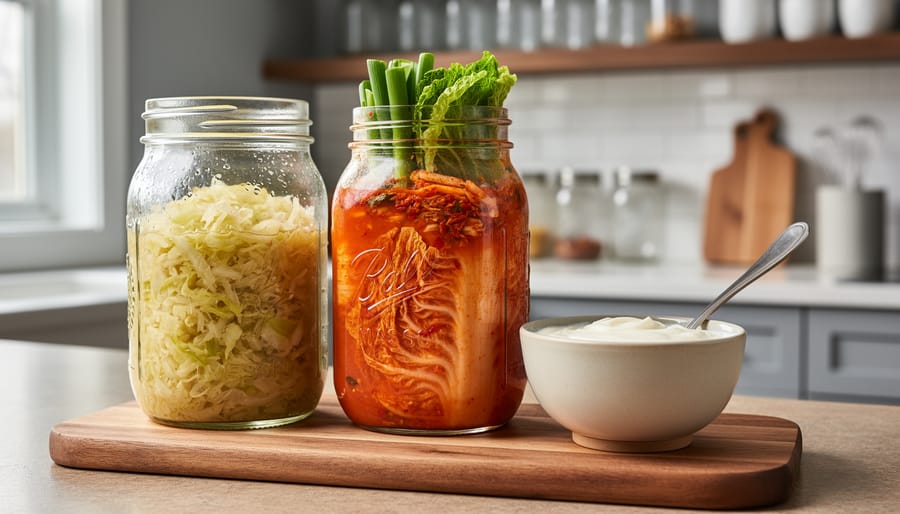
Fermented foods span everything from tangy yogurt and crunchy sauerkraut to fizzy kombucha and umami-rich miso. This ancient preservation method, where beneficial bacteria or yeast break down sugars and starches, has nourished humans for thousands of years and continues to gain attention in 2026 for its gut-health benefits and role in reducing food waste.
If you’re looking to explore fermented options for your kitchen, you’ll find 15 practical choices organized by category below: dairy staples like kefir and cheese, vegetable favorites including kimchi and pickles, soy-based proteins such as tempeh and natto, cultured beverages, fermented grains like sourdough bread, and other pantry essentials. Many of these foods contain live microbes that support digestion, and nearly all transform simple ingredients into shelf-stable, flavorful products that help you stretch your grocery budget and cut back on waste.
For Canadian home cooks, fermenting at home offers a sustainable way to preserve seasonal produce when it’s abundant and affordable. That overflowing cabbage harvest? Turn it into sauerkraut. Extra milk nearing its best-before date? Culture it into yogurt. You don’t need specialized equipment or scientific precision to get started, just clean jars, salt or a starter culture, and a bit of patience.
The list ahead gives you real options to try, whether you’re buying your first jar of kimchi or planning your next fermentation project. Each category includes familiar grocery-store finds alongside adventurous choices that broaden your fermented food repertoire without overwhelming your schedule or your pantry space.
Why Fermented Foods Deserve a Spot in Your Fridge
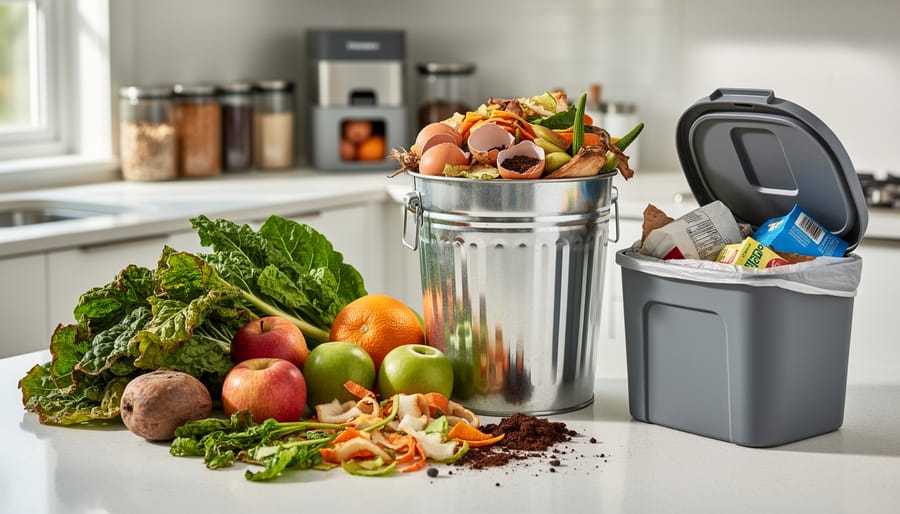
Fermentation has kept food edible long before refrigeration existed, and that ancient wisdom matters more than ever when you consider how food waste harms the planet. Transforming fresh ingredients through natural fermentation isn’t just about creating tangy, complex flavours, it’s one of the most effective ways to prolong the shelf life of foods that might otherwise end up in your compost bin.
The beauty lies in simplicity. Most fermented foods require little more than salt, time, and naturally occurring bacteria or yeast to work their magic. That surplus cabbage from your garden? It becomes sauerkraut that sits happily in your fridge for months. Extra milk before you leave for vacation? Turn it into yogurt or kefir. A bumper crop of cucumbers? Fermented pickles preserve the harvest without needing electricity or fancy equipment.
This approach aligns perfectly with waste reduction because fermentation has always been about making food last. For thousands of years, cultures worldwide relied on these techniques to survive leaner seasons, and that same principle helps Canadian home cooks stretch their grocery budgets and lighten their environmental footprint today.
How We Chose These Fermented Foods
We didn’t pick these fifteen fermented foods at random. Each one made the list because it’s accessible in Canada, either easy to buy at mainstream grocery stores or simple to make at home with basic equipment. We prioritized foods with real waste-reduction potential, like sourdough starter that rescues flour or apple cider vinegar made from scraps. We also wanted variety across categories: dairy, vegetables, soy products, beverages, grains, and a few wildcards. Cultural diversity mattered too. Fermentation shows up in kitchens worldwide, from Korean kimchi to Eastern European kvass, and we wanted that richness reflected here. Above all, these are practical choices for everyday Canadian kitchens, not exotic ingredients that require specialty shops or advanced skills.
Fermented Dairy
1. Yogurt, The Everyday Staple
Yogurt is probably the most familiar fermented food in Canadian kitchens, and for good reason. It’s easy to find, simple to make at home, and incredibly versatile. When you’ve got milk approaching its best-before date, turning it into yogurt extends its life by weeks while creating something delicious. The fermentation process relies on live microorganisms definition that convert lactose into lactic acid, giving yogurt its characteristic tang and thick texture. Use it in smoothies, as a sour cream substitute, mixed into overnight oats, or simply topped with fruit and granola. It’s a genuine waste fighter that works hard in your fridge.
2. Kefir, Drinkable Probiotic Powerhouse
Kefir looks a lot like a drinkable yogurt, but its tangier, more complex flavour sets it apart. Made by adding kefir grains, living clusters of bacteria and yeast, to milk, this fermented drink offers a refreshing way to rescue milk that’s nearing its best-before date. What makes kefir especially waste-free is the grains themselves: you can reuse them indefinitely, passing them from batch to batch or sharing extras with friends. No need to buy new cultures every time.
Drink kefir straight, blend it into smoothies, or use it as a base for salad dressings and overnight oats. Its slightly effervescent quality adds interest to morning routines, and because it ferments at room temperature in 12 to 24 hours, you don’t need special equipment. Just a jar, some milk, and those hardy little grains.
3. Cheese, From Fresh to Aged
Cheese stands as one of humanity’s oldest preservation techniques, transforming fresh milk into something that can last weeks, months, or even years. The process relies on bacterial cultures and sometimes mold to acidify and coagulate milk proteins, creating everything from soft, spreadable cheeses you can make in your kitchen to hard, aged wheels that develop complex flavours over time.
Starting simple works best: cottage cheese and ricotta require just milk, an acid (like lemon juice or vinegar), and heat. They’re ready in under an hour and use milk that’s nearing its best-before date. From there, you can explore firmer varieties like queso fresco or paneer, which press out more whey and last longer in the fridge. Aged cheeses like cheddar or gouda take more time and specific conditions, but they showcase fermentation’s power to turn a perishable liquid into a shelf-stable staple that actually improves with age.
Fermented Vegetables
4. Sauerkraut, Simple Cabbage, Big Flavour
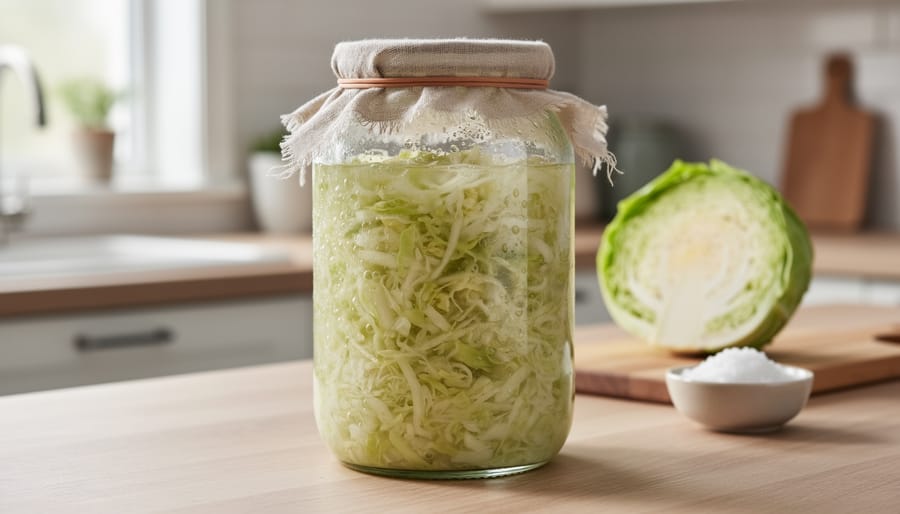
Sauerkraut is fermentation stripped down to its essentials: shredded cabbage, salt, and time. This German staple transforms a simple head of cabbage into a tangy, crunchy condiment that lasts for months in the fridge. If you’ve got a cabbage that’s losing its crispness or half a head leftover from another recipe, sauerkraut rescues it from the compost bin while delivering a flavour boost to sandwiches, bowls, and sides. The fermentation process relies on wild bacteria naturally present on the cabbage leaves, which break down sugars and create that signature sour taste. Like kimchi and sauerkraut unpasteurized versions contain live microbes that support gut health, making this humble cabbage dish both a waste-fighter and a probiotic powerhouse.
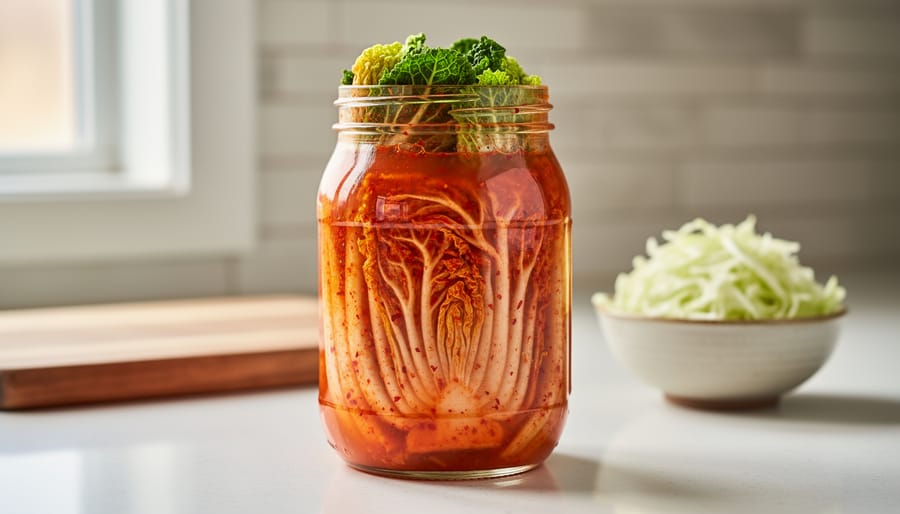
5. Kimchi, Korea’s Spicy Gift to the World
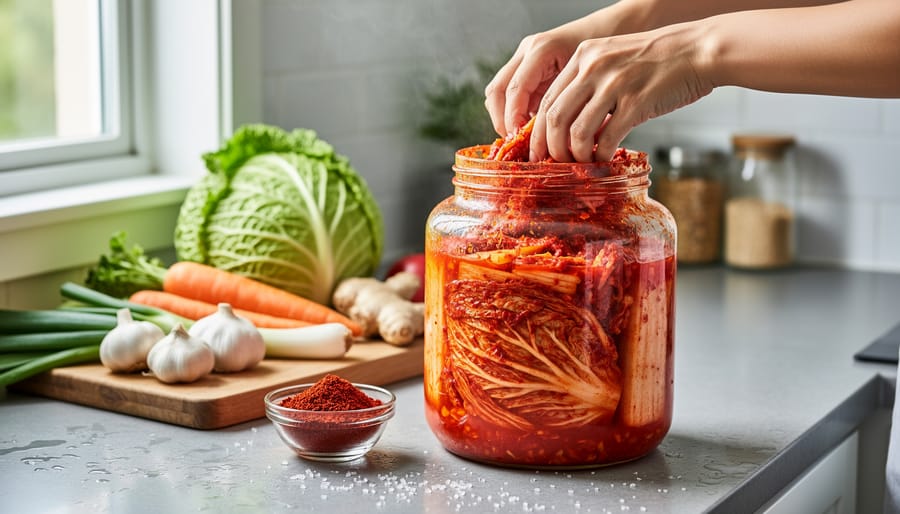
Kimchi brings fire to your plate, literally. This iconic Korean staple layers napa cabbage, radishes, scallions, and garlic with gochugaru (Korean red pepper flakes), fish sauce or salted shrimp, and ginger into a crimson, crunchy, deeply savoury ferment. The result? A punch of umami, heat, and tang that wakes up rice bowls, tacos, grilled cheese, and scrambled eggs.
Beyond flavour, kimchi carries cultural weight. It’s been a cornerstone of Korean cuisine for centuries, traditionally made in large batches each autumn to sustain families through winter. Today, it offers Canadians a practical way to rescue wilting cabbage, limp radishes, or surplus green onions headed for the compost. Like sauerkraut and kombucha, kimchi contains live microbes that thrive during fermentation, though pasteurized store-bought versions lose that benefit.
One batch goes a long way: kimchi keeps for months in the fridge, its flavour deepening over time, making it both a waste-fighter and a versatile kitchen workhorse.
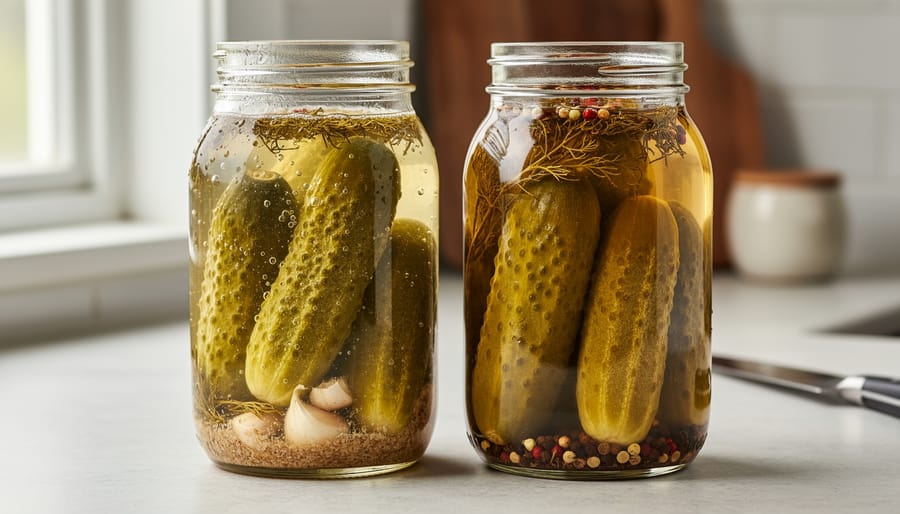
6. Fermented Pickles, Not Your Grocery Store Jar
Most supermarket pickles get their tang from vinegar, but true fermented pickles rely on salt and time. The difference matters: naturally fermented pickles contain live bacteria that develop during the curing process, giving them complex, tangy flavour and potential probiotic benefits that vinegar versions lack.
This method rescues cucumbers at the end of their shelf life and works just as well with carrots, green beans, or radishes that might otherwise get tossed. Pack your vegetables in a saltwater brine (about two tablespoons of salt per litre of water), weigh them down to keep them submerged, and let wild bacteria do the work over a week or two.
The result is crunchy, sour pickles that last for months in the fridge. You’re not just preserving vegetables, you’re creating a living food that adds snap and flavour to sandwiches, salads, and snack plates all year long.
Fermented Soy Products
7. Miso, Umami in a Paste
Miso is a thick, salty paste made from fermented soybeans (often blended with rice or barley) that delivers an intense umami punch to soups, marinades, dressings, and glazes. Fermentation transforms the beans over months or even years, developing complex, savoury flavours that range from mild and slightly sweet (white miso) to bold and earthy (red or dark miso). Because it’s so concentrated, a spoonful goes a long way, and an unopened container can last for years in the fridge, making it a practical pantry staple for Canadian kitchens where waste and storage space matter. Stir it into broth for instant depth, whisk it into salad dressings, or spread it on roasted vegetables for a flavour boost that beats throwing out bland leftovers.
8. Tempeh, Firm, Nutty, and Nutrient-Dense
Tempeh is an Indonesian staple made by fermenting cooked soybeans with a specific mold culture until they bind into a firm, sliceable cake. The texture is dense and slightly nutty, making it a versatile meat alternative that holds up well in stir-fries, sandwiches, and grain bowls. Fermentation breaks down some of the complex proteins and fibers in soybeans, making tempeh easier to digest than plain beans and boosting nutrient availability. It’s also incredibly shelf-stable: a block of tempeh can last weeks in the fridge, reducing the chance that your protein stash goes to waste. Unlike tofu, tempeh has a pronounced earthy flavor that stands up to bold marinades and spices. You can crumble it, slice it, or cube it, and it soaks up whatever you throw at it while contributing its own depth.
9. Natto, An Acquired Taste Worth Trying
Natto won’t win any beauty contests. These sticky, stringy fermented soybeans smell pungent and develop a slippery coating that puts off many first-timers. But in Japan, natto is a breakfast staple prized for its savoury depth and nutritional punch. The fermentation process transforms plain soybeans into a protein-rich food that keeps for weeks in the fridge, rescuing beans that might otherwise languish unused. If you can get past the texture, natto offers a glimpse into a fermentation tradition that’s been feeding people efficiently for centuries. Start with small amounts mixed into rice or scrambled eggs, and you might just join the converted.
Fermented Beverages
10. Kombucha, Fizzy, Tangy, and Trendy
Kombucha delivers a fizzy, tangy kick that’s become a staple in health-conscious Canadian households. This fermented tea relies on a SCOBY (symbiotic culture of bacteria and yeast), a rubbery disc that transforms sweetened tea into a probiotic-rich beverage. The SCOBY can be reused batch after batch, making kombucha a zero-waste champion that rescues extra tea bags and sugar sitting in your pantry. It contains live microbes that survive the fermentation process, adding to its appeal for gut health enthusiasts. Flavour possibilities are endless, add fruit scraps, ginger, or herbs during a second fermentation to create custom blends. A gallon-sized jar, some black or green tea, sugar, and a SCOBY from a friend or online supplier are all you need to start brewing at home. The result is a fizzy alternative to soda that puts leftover ingredients to work while delivering refreshing complexity in every sip.
11. Apple Cider Vinegar, From Scraps to Staple
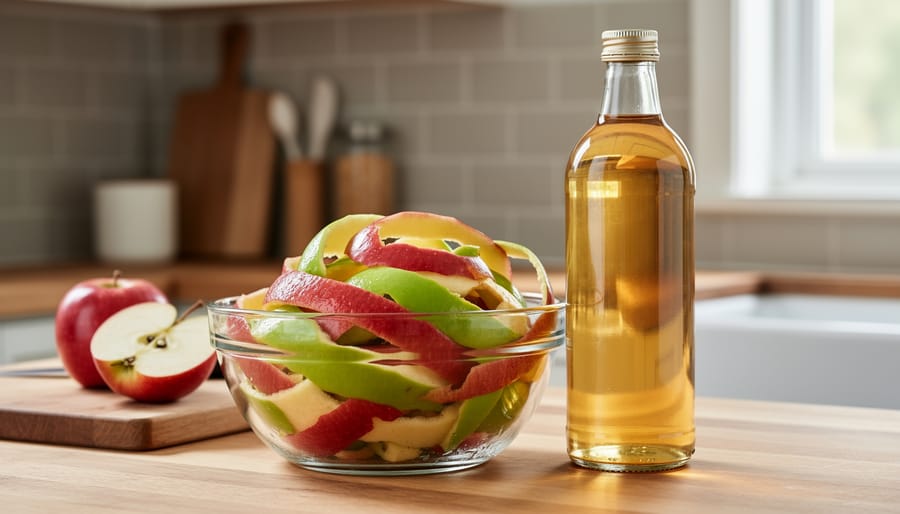
Apple cider vinegar transforms kitchen scraps into a multipurpose pantry staple. Instead of tossing apple cores and peels into the compost, you can ferment them with water and a bit of sugar to create tangy, live-culture vinegar. The process takes a few weeks, but it’s hands-off and costs almost nothing.
Once fermented, apple cider vinegar earns its keep in the kitchen. Use it in salad dressings, marinades, and pickling brines, or add a splash to soups for brightness. Beyond cooking, it works as a natural cleaning agent for countertops and windows, and some people swear by it for DIY hair rinses.
Making your own vinegar means you’re not just reducing waste, you’re creating a versatile ingredient that replaces store-bought bottles. It’s one of the simplest ways to turn what would’ve been garbage into something genuinely useful.
Fermented Grains
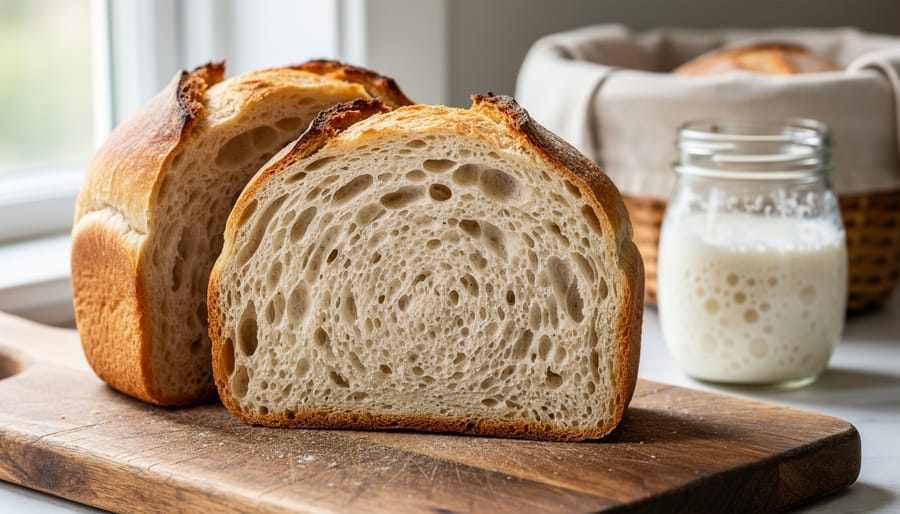
12. Sourdough Bread, The Starter That Keeps on Giving
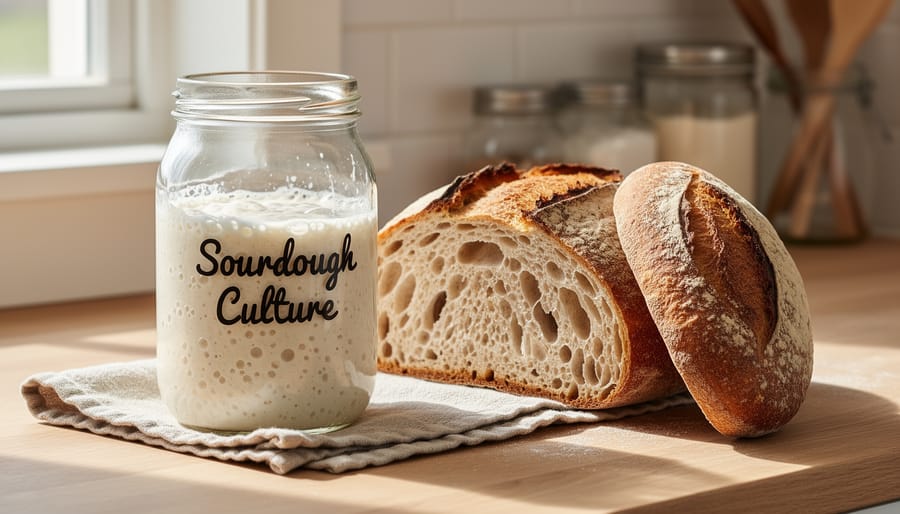
Sourdough bread stands apart from commercial loaves because it relies on wild yeast and lactic acid bacteria captured in a starter culture, a living mixture of flour and water that ferments over time. You feed the starter regularly with fresh flour and water, discard a portion (or use it in other recipes), and keep the cycle going indefinitely. This reusable culture means you’re not buying packets of commercial yeast every time you bake, cutting packaging waste and reliance on store-bought ingredients.
Sourdough also rescues flour that might languish in your pantry. A healthy starter transforms simple flour and water into complex, tangy bread with better digestibility and a longer shelf life than many mass-produced options. The slow fermentation breaks down starches and develops flavour, making each loaf a small act of resourcefulness. Once you’ve established a starter, you’ve got a self-sustaining baking companion that reduces waste and connects you to a bread-making tradition thousands of years old.
Other Notable Ferments
13. Fermented Hot Sauce, Heat with Depth
Fermenting hot peppers transforms raw heat into layered complexity. Fresh chilies carry a sharp, one-dimensional burn, but fermentation introduces tang, umami, and a rounded flavour that balances the capsaicin. The process also softens the sauce’s edge, making even superhot varieties more palatable.
This method shines when your garden or market haul delivers more peppers than you can eat fresh. Instead of watching them wrinkle on the counter, pack them into a brine with salt, garlic, and maybe some onion or carrot. After a week or two of fermentation, blend the mixture into a sauce that keeps for months in the fridge. You’ve turned potential waste into a condiment that adds depth to tacos, eggs, or marinades, no vinegar required.
14. Kvass, Eastern Europe’s Bread-Based Beverage
Kvass is a traditional Eastern European beverage that turns yesterday’s stale rye bread into today’s refreshing drink. Popular in Russia, Ukraine, and Poland for centuries, this mildly alcoholic (or non-alcoholic, depending on fermentation time) beverage has a slightly sour, earthy flavor that’s oddly satisfying on a warm day. Making kvass is simple: soak toasted bread chunks in water with a bit of sugar, add a starter culture or let wild yeast do the work, and ferment for a few days. The result is a fizzy, tangy drink that rescues bread destined for the bin. Some versions include raisins, honey, or herbs for extra complexity. Kvass proves that even the stalest loaf has potential, transforming kitchen scraps into a beverage with deep cultural roots and genuine character.
15. Fermented Salsa and Relishes, Condiments with Character
Fermenting salsas and relishes turns peak-season tomatoes, peppers, onions, and herbs into tangy condiments that last for months instead of days. When your garden explodes with produce in late summer, a quick ferment preserves that bounty without canning equipment or freezer space. The process is simple: chop your vegetables, add salt, pack them into a jar, and let wild bacteria do the work. Within a few days to a week, you’ll have a zesty condiment with deeper flavour than its fresh counterpart. Fermented salsas pair beautifully with tacos, grilled meats, and grain bowls, while fermented relishes add punch to sandwiches and cheese boards. You’re not just saving food from spoiling, you’re creating a versatile pantry staple that brings complexity to everyday meals.
Getting Started: Simple Tips for Home Fermentation
You don’t need fancy equipment or a science degree to start fermenting at home. Begin with something forgiving like sauerkraut or yogurt, both require minimal ingredients and are hard to mess up. For sauerkraut, you’ll need cabbage, salt, and a clean jar. For yogurt, grab some milk and a spoonful of store-bought yogurt as your starter. A basic fermenting crock or mason jars work beautifully, and you likely already own them.
Here are a few tips to make your first fermentation successful:
- Start with one or two foods rather than trying everything at once
- Use clean (but not sterile) equipment, a good wash with hot soapy water is enough
- Trust your senses: healthy ferments smell tangy and pleasant, not rotten
- Be patient and give your cultures time to work their magic
- Don’t be afraid to experiment and adjust flavours to your taste
Many health food stores across Canada sell yogurt cultures, kefir grains, and kombucha SCOBYs. Online retailers also ship starter cultures nationwide. Once you get comfortable, fermentation becomes a practical way to use food scraps and preserve seasonal bounty. While Canada’s food guide does not explicitly mention fermented foods, they fit perfectly into a balanced diet rich in vegetables, whole grains, and protein foods.
Safety and Storage: What You Need to Know
Fermentation works through a simple transformation: bacteria or yeast break down a food’s sugars and starches, creating lactic acid, alcohol, or acetic acid that preserve the food and develop those signature tangy, complex flavours. This process has kept food safe for thousands of years, but it’s natural to have questions when you’re starting out.
Healthy ferments smell pleasantly sour, show small bubbles during active fermentation, and might develop a thin white film of harmless yeast on the surface. Foods like kimchi, sauerkraut, and kombucha contain live microbes, which is exactly what makes them beneficial. Store most fermented foods in the fridge once they’ve reached your desired flavour; the cold slows fermentation without stopping it entirely. Sealed jars of sauerkraut can last months in the fridge, while kombucha stays fresh for weeks. Always use clean utensils to scoop out portions, introducing contaminants can spoil a batch. If you’re ever unsure, discard it. Fermentation is forgiving, but it shouldn’t stress you out.
Common Questions About Fermented Foods
Do all fermented foods contain live probiotics?
Not necessarily. While fermentation creates beneficial bacteria, heat treatment kills them. Pasteurized yogurt, canned sauerkraut, and baked sourdough bread have been fermented but don’t contain live microbes. For probiotics, look for unpasteurized versions labeled with live cultures, kimchi, sauerkraut, and kombucha often fall into this category if they’re sold refrigerated.
Can I ferment foods without special equipment?
Absolutely. You can start with what you already have: a clean jar, a plate or weight to keep vegetables submerged, salt, and water. Sauerkraut needs nothing more than cabbage, salt, and a mason jar. As you get more comfortable, you might add fermentation weights or airlocks, but they’re not essential for success.
How long do fermented foods last?
It varies. Refrigerated sauerkraut and kimchi can last six months or longer; miso and apple cider vinegar stay good for a year or more. Kombucha and kefir are best consumed within a few weeks. The key is proper storage, keep ferments sealed and cold after they’ve reached your preferred flavour, and watch for off smells or mold as signs they’ve gone bad.
Are fermented foods safe for everyone?
Most people tolerate fermented foods well, but if you’re new to them, start small, your gut needs time to adjust. Those with histamine sensitivities or compromised immune systems should consult a healthcare provider before adding unpasteurized ferments to their diet.
Do fermented foods help reduce food waste?
Yes. Fermentation extends the life of perishable ingredients like cabbage, milk, and fruit scraps, turning them into shelf-stable staples. It’s one of the oldest preservation methods and remains one of the most effective.
What’s the difference between fermented and pickled?
Fermentation relies on bacteria or yeast breaking down sugars and starches, while pickling uses vinegar or brine. Fermented pickles develop naturally through salt and time; vinegar pickles are faster but lack the live cultures found in true ferments.
Canada’s food guide doesn’t explicitly call out fermented foods, but they fit comfortably into a balanced diet, especially when you’re looking for ways to preserve seasonal produce and cut down on waste. If a ferment smells rotten, shows fuzzy mold, or tastes off, trust your instincts and toss it.
Your Waste-Fighting Fermentation Journey Starts Now
You don’t need to master all fifteen fermented foods at once. Pick one that excites you, maybe a simple jar of sauerkraut or a batch of yogurt, and see where it takes you. Each experiment teaches you something about flavour, texture, and timing, and every successful ferment is a small victory against the compost bin.
Fermentation isn’t just about following recipes. It’s about watching what’s already in your fridge, recognizing what might soon spoil, and asking yourself: could I preserve this instead? That half-cabbage, those soft apples, the milk nearing its date, they’re all candidates. The save food from wasting mindset shifts from disposal to transformation, and fermentation is one of the oldest tools we have for making it happen.
You’ll find more practical tips for Canadians throughout this site, but the core principle remains simple: start small, trust the process, and let traditional preservation methods work for you. Your kitchen can become a quieter place, less waste, more possibility, and flavours that improve with time.