Unopened baking powder typically lasts 18 to 24 months from the manufacturing date, while an opened container stays fresh for about 6 to 12 months when stored properly. That tin sitting in your pantry right now might still be perfectly usable, or it could have lost its leavening power weeks ago. The only way to know is to test it.
The shelf life of baking powder comes down to moisture. Its acid and alkaline ingredients slowly react with humidity in the air, even inside a closed container, and each bit of that reaction uses up lift you’ll want later. Expired baking powder won’t make you sick. It will give you flat, dense muffins and sad pancakes, and you’ll have wasted your time and ingredients on top of it. Plenty of Canadian home cooks toss a container the moment the printed date passes, never realizing a 30-second test can show whether it still works.
Good storage can push baking powder well past that printed date. And once you know the signs of degradation, you’ll stop wondering whether a baking flop was your fault or your leavening agent’s. Understanding shelf life also helps you buy smarter, store better, and reduce unnecessary food waste in your kitchen.
What Makes Baking Powder Expire?
Baking powder doesn’t spoil like milk or meat, but it does lose its ability to do its job. The culprit? A chemical reaction that happens slowly over time, even when you’re not using it.
Baking powder is essentially a pre-mixed blend of an acid and a base (usually sodium bicarbonate), along with a moisture-absorbing starch. When these components get wet, they react and release carbon dioxide gas, those bubbles that make your pancakes fluffy and your muffins rise. The problem is, moisture doesn’t just come from your mixing bowl. It’s in the air around us, especially in humid climates or steamy kitchens.
Every time you open the container, tiny amounts of moisture sneak in. Even through a closed lid, humidity can gradually seep through over months and years. Once moisture reaches those reactive ingredients, they start their chemical reaction prematurely. Instead of waiting to create lift in your batter, they fizz away uselessly in the container. After enough of this slow reaction occurs, not enough active ingredients remain to properly leaven your baked goods.
Heat accelerates this process significantly. A container stored near your stove or in a warm cupboard will lose potency faster than one kept in a cool pantry. The warmth speeds up the unwanted chemical reactions and can cause the powder to clump as moisture gets trapped.
Time alone eventually does the damage too. Even in perfect storage conditions, baking powder gradually weakens. The acid and base components slowly interact at a molecular level, or the acid component itself can break down, leaving you with powder that looks fine but produces disappointing results when you need it most.
Shelf Life Timelines: Unopened vs. Opened Baking Powder
Most baking powder containers have a “best by” date printed on the bottom or side. It’s a solid starting point, but the real shelf life of baking powder depends on two things: whether you’ve opened the container, and where it’s been sitting since.
Unopened Baking Powder
An unopened container typically stays good for 12 to 18 months beyond the manufacturer’s date when stored properly. Some brands hold up even longer if they’re kept somewhere cool and dry, away from temperature swings. The sealed container shuts out humidity, and humidity is the main enemy of leavening power.
Opened Baking Powder
Once the seal is broken, plan on about six months of reliable performance. Every time you scoop, the powder meets air and kitchen moisture, and that slowly weakens the chemical reaction that makes your batter rise. Bake only now and then? You may never finish a can before it fades. For a closer look at shelf life once opened it’s worth reading up on how quickly exposure takes its toll.
| Storage Condition | Shelf Life | Potency After Timeline |
|---|---|---|
| Unopened, cool & dry | 12-18 months past date | Often still good |
| Opened, ideal storage | 6 months | Declining, test before use |
| Opened, humid environment | 3-4 months | May fail sooner |
| Opened, exposed to moisture | Weeks to 2 months | Likely ineffective |
Real-World Expectations
These timelines assume ideal conditions, and most kitchens aren’t ideal. A can parked beside the stove or in a damp basement will go flat much faster than one tucked into a pantry with steady temperatures. Canadian kitchens swing with the seasons, so expect shorter life during humid summer months.
Don’t toss your baking powder the day it hits the six-month mark. Test it first. Plenty of containers stay effective well past these guidelines when stored carefully, which means less waste and more value from what you’ve already bought.
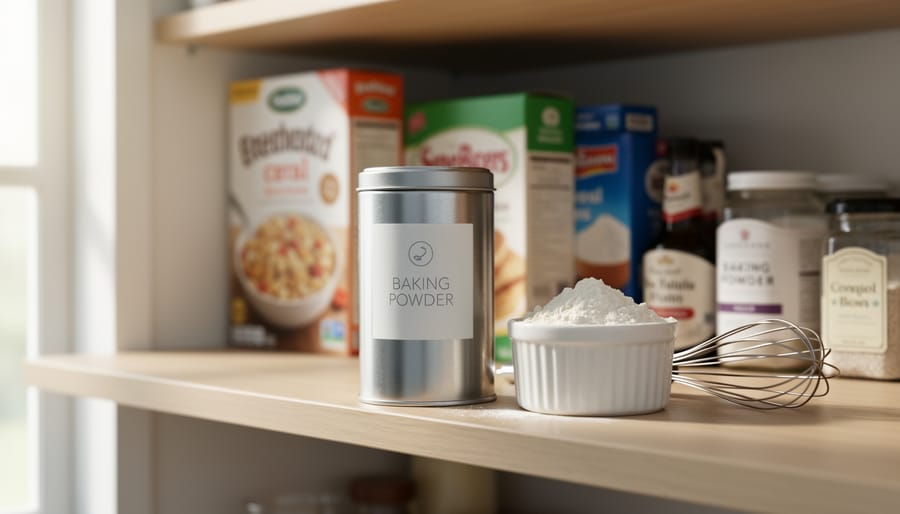
An unopened baking powder canister set in a tidy pantry helps visually reinforce storage and freshness considerations.
The Simple Test That Tells You If Your Baking Powder Still Works
You don’t need fancy equipment or a chemistry degree to check if your baking powder still has life left in it. The hot water test takes about 30 seconds and requires just two things you already have: hot water and a spoon.
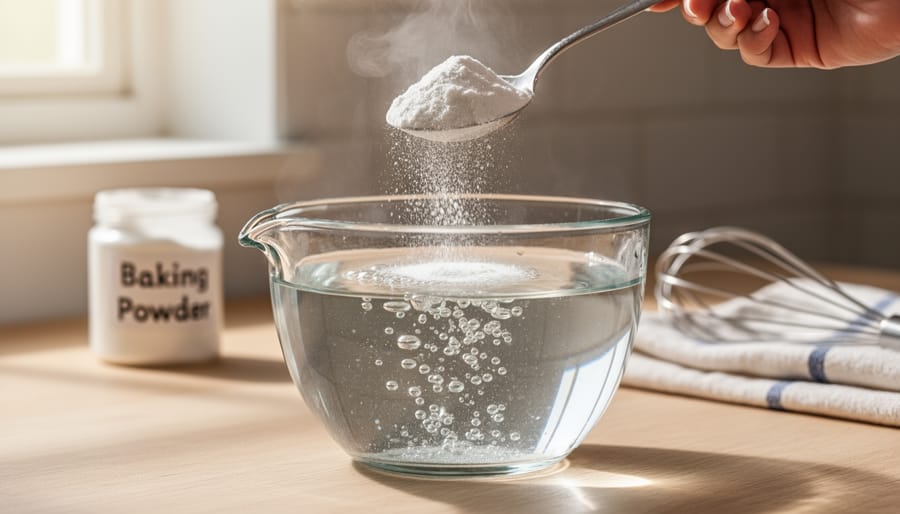
Here’s how to do it. Put half a teaspoon of baking powder in a small bowl or cup. Pour about a quarter cup of hot tap water over it, it doesn’t need to be boiling, just hot from your tap. Watch what happens immediately.
Fresh, active baking powder will fizz and bubble vigorously the moment the water hits it. You’ll see lots of bubbles forming right away, similar to what you’d see if you dropped an Alka-Seltzer tablet in water. This bubbling is the carbon dioxide gas being released, which is exactly what makes your baked goods rise.
If your baking powder produces weak, lazy bubbles or barely reacts at all, it’s lost most of its leavening power. You might still see a slight reaction, but if it’s not immediate and enthusiastic, your cookies and cakes won’t rise properly. Toss it and buy fresh.
The test works because baking powder contains both an acid and a base that react when they get wet. Fresh powder reacts strongly. Old powder has already degraded or absorbed moisture from the air, so the reaction is weak or non-existent. It’s that simple, and it saves you from flat pancakes and dense muffins.

Storage Tips to Extend Baking Powder’s Life
Proper storage can add months to your baking powder’s shelf life, and the fixes are easier than you think. Most Canadian home cooks unknowingly sabotage their baking powder by storing it in the wrong spots or leaving it vulnerable to humidity.
The biggest enemy of baking powder is moisture. Even a small amount of humidity sets off the chemical reaction early, using up the leavening power before you ever mix a batter. That’s why keeping baking powder in its original container with the lid tightly sealed after every use matters so much. If you’ve moved it to another container, make sure it’s completely airtight. Flimsy plastic containers with loose lids won’t cut it. Research on dry goods backs this up: long-term storage preserves function best when the product stays dry and sealed from the start.
Temperature swings also shorten baking powder’s life. Storing it near your stove, oven, or dishwasher exposes it to heat and steam that speed up degradation. The same goes for that cabinet above your kettle or coffee maker. Choose a cool, dry spot away from heat sources instead. A pantry shelf or a cupboard away from appliances works perfectly.
Here are the essential storage practices that keep baking powder fresh:
- Always seal the container tightly immediately after measuring
- Store in a cool, dry location away from the stove, oven, and sink
- Keep it in its original container or transfer to an airtight glass or metal tin
- Never use a wet measuring spoon, since moisture from your spoon contaminates the entire container
- Avoid storing in the fridge or freezer, where condensation forms when you take it out
- Place a small packet of food-safe silica gel in the storage area if your kitchen tends to be humid
One mistake Canadians often make, especially in humid summer months or coastal regions, is underestimating how much moisture affects baking powder. If you live in a particularly humid area or notice condensation in your kitchen during cooking, keep your baking powder in a sealed bag inside its container for extra protection.
The effort is minimal, but good storage can mean the difference between baking powder that lasts six months and one that stays potent for two years. If you want more ideas for stretching pantry staples, these ways to save food from wasting pair well with the habits above, and the baking tips worth checking out cover what to do once your ingredients are in good shape.
What to Do With Baking Powder That’s Lost Its Punch
Just because your baking powder won’t make fluffy pancakes anymore doesn’t mean it’s destined for the landfill. That expired container sitting in your pantry still has plenty of cleaning power left in it, here’s how to put it to work.
Turn It Into a Gentle Scrubbing Cleaner
Mix expired baking powder with a bit of water to create a paste that works wonders on stubborn kitchen stains. It’ll tackle burnt-on food in pots, remove coffee rings from mugs, and clean stainless steel sinks without scratching. The mild abrasive quality makes it perfect for surfaces you want to protect while still getting genuinely clean.
Freshen Up Your Drains
Pour half a cup of old baking powder down your kitchen or bathroom drain, follow it with hot water, and let it sit for 15 minutes. While it won’t have the same fizzing power as fresh baking soda and vinegar, it still helps neutralize odors and can loosen minor buildup. It’s especially handy for maintaining drains between deeper cleanings.
Deodorize Carpets and Upholstery
Sprinkle expired baking powder on carpets, rugs, or fabric furniture, let it sit for 30 minutes, then vacuum it up. The powder absorbs odors from pets, cooking smells, or general mustiness, particularly useful during long Canadian winters when you can’t air things out as easily.
Neutralize Fridge and Freezer Odors
Place an open container of expired baking powder in your refrigerator or freezer. Replace it every few months. It’s not quite as effective as fresh baking soda for this purpose, but it still helps absorb lingering food smells rather than adding another item to your garbage bin.
These simple uses mean you’re getting every bit of value from a product you’ve already paid for while keeping unnecessary waste out of Canadian landfills.
Smart Buying Strategies to Reduce Waste
Most Canadians have bought an 850g container of baking powder because it was on sale, only to realize months later that they bake once or twice a year. That’s money wasted and a good reason to rethink how you shop for leavening agents.
Buy small if you bake occasionally. The standard 113g or 227g tins are plenty for someone who whips up pancakes on weekends or a birthday cake every few months. You’ll use it up while it’s still potent, and you won’t feel guilty tossing a half-full jumbo container when it loses its fizz.
If you bake weekly, bread, muffins, cookies, a larger 454g or 680g container makes sense. Just check the date code before buying, especially at discount grocers where stock might sit longer. A container dated six months ago has already burned through a quarter of its effective life before you even open it.
Bulk stores like Costco offer tempting prices, but split the container with a neighbour or baking friend if you can’t use 2kg within a year. The per-gram savings vanish when you throw away half.
Track your usage for a month or two. If one small tin lasts you eight months, you know your actual consumption rate and can plan purchases accordingly. Buying based on what you actually use, not what seems like a bargain, is the smartest waste-reduction strategy for baking powder and most pantry staples.
Other Baking Ingredients and Their Shelf Lives
Understanding baking powder’s shelf life is easier when you compare it to other staples in your pantry. Here’s how common baking ingredients stack up:
| Ingredient | Unopened | Opened |
|---|---|---|
| Baking Powder | 18-24 months | 6-12 months |
| Baking Soda | 2 years | 6 months (if exposed to moisture) |
| Active Dry Yeast | 2 years (refrigerated) | 4 months (refrigerated) |
| All-Purpose Flour | 6-8 months | 6-8 months |
| Ground Spices | 2-3 years | 1-2 years |
Baking soda outlasts baking powder because it’s a single compound rather than a mixture of acids and bases. It won’t lose potency sitting on your shelf, though moisture exposure can clump it up. You can test baking soda with vinegar instead of hot water, fresh soda will bubble vigorously.
Yeast is more temperamental. Active dry yeast needs refrigeration after opening and loses viability faster than either type of chemical leavener. Flour’s shelf life depends heavily on type, whole grain flours contain oils that go rancid within months, while white flour lasts longer.
The takeaway? Baking powder sits in the middle range. It won’t last as long as your spice collection, but you’ll replace it less often than yeast or whole wheat flour.
Keeping tabs on your baking powder’s shelf life is one of those small kitchen habits that pays off in better baking results and less money thrown away. A quick fizz test takes thirty seconds, and storing that container properly, away from moisture and heat, means you’ll actually use what you buy instead of tossing expired powder into the bin.
Check your pantry this week. If you’ve got baking powder that’s been sitting there for over a year, test it. If it’s lost its punch, put it to work cleaning your sink or scrubbing stubborn stains rather than sending it straight to the trash. These simple practices add up, fewer wasted ingredients, more reliable recipes, and a kitchen that aligns with the sustainable food habits Canadians are increasingly embracing. Your cakes will rise, your budget will thank you, and you’ll be doing your part to reduce unnecessary food waste.
Symptom triage
Baking powder rarely fails all at once. It fades, and the signs show up in your bakes before they show up in the can. If something went wrong in the oven, match what you saw to the likely cause below before you toss the tin.
- Flat, dense cakes or muffins: The leavening has lost strength. Run the fizz test: stir a half teaspoon into a few tablespoons of hot water. Weak or no bubbling means it’s done.
- Good rise in the oven, then a sunken center: Usually too much baking powder, or an oven door opened too early. Check your measuring spoon first.
- Metallic or bitter aftertaste: Almost always an overdose. Level the spoon instead of heaping it.
- Coarse, tunneled crumb: Overmixing after adding the powder, or uneven distribution. Whisk it into the dry ingredients thoroughly.
- Clumps or hard lumps in the tin: Moisture got in. Press a lump between your fingers. If it crumbles back to powder, sift it and run the fizz test. If it stays hard or smells off, replace it.
- Fine rise, but the tin is over a year old: Test anyway. Strength drops gradually, so a bake can look acceptable while the powder is already marginal.
If the fizz test is strong and the symptoms persist, the powder isn’t your problem. Look at oven temperature, batter acidity, and mixing technique next.
Step-by-step fix
If your baking powder isn’t giving you lift, don’t toss the can yet. Run through these steps in order and you’ll know in about two minutes whether it’s the powder or something else in your recipe.
- Check the date and the history. Unopened powder is usually good for 18 to 24 months, but an opened can drops to 6 to 12 months. If yours has been open longer than a year, move straight to the test.
- Run the fizz test. Stir half a teaspoon of baking powder into about a quarter cup of hot tap water. Fresh powder bubbles hard and fast. A lazy fizz or no reaction means it’s spent.
- Replace it if it fails. Don’t try to compensate by adding more. Extra spent powder won’t fix a flat cake, and too much of the live stuff leaves a bitter, metallic taste.
- Measure with a dry spoon. A damp spoon dipped into the can introduces moisture, and that slowly kills the powder you’ve got left.
- Fix the storage. Keep the lid tightly closed, and store the can in a cool cupboard away from the stove, dishwasher, or any steamy spot.
- Rule out other causes. If the powder passes the test and your bake still falls flat, look at oven temperature, overmixing, or letting the batter sit too long before baking.
Date the lid with a marker the day you open a new can. It takes five seconds and saves you from guessing next year.
Prevention
Most baking powder fails for one boring reason: moisture. The powder is a dry mix of an acid and a base, and once humidity gets in, the two start reacting in the can instead of in your batter. By the time you reach for it, half the lift is already gone. A few habits keep that from happening.
- Keep it out of the steam zone. The shelf above the stove is the worst spot in most kitchens. Heat and steam both shorten the life of an opened can. A cool cabinet away from the range and dishwasher is far better.
- Use a dry spoon, every time. One damp measuring spoon dipped into the can is enough to start clumping. Never measure directly over a steaming bowl.
- Seal it right away. Press the lid on firmly after each use. If the original lid has gone loose, move the powder to an airtight jar.
- Write the open date on the lid. A strip of masking tape and a marker takes ten seconds and removes the guesswork when the 6 to 12 month window starts closing.
- Buy smaller cans if you bake rarely. A big container that lasts two years is no bargain when the powder goes flat after one.
Finally, keep one can in rotation at a time. Opening a fresh one while the old one sits half full just means two cans quietly losing strength. Finish the old can, then open the new one.