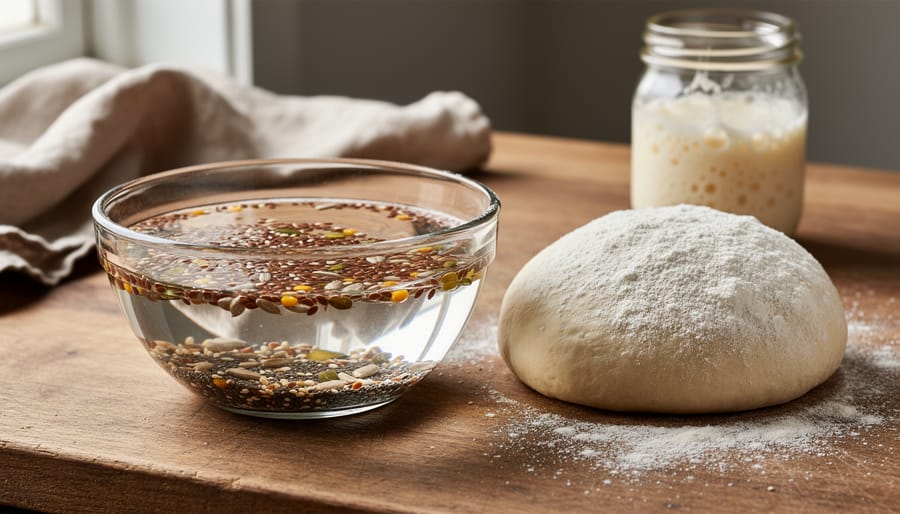
Soak your seeds in water for a few hours or overnight, then fold them into the dough during the first or second fold, once the gluten has built some strength. That’s the whole method for seeded sourdough bread, and it works with just about any seed in your pantry: flax, sunflower, poppy, chia, pumpkin, or sesame.
Why the soak? Dry seeds act like tiny sponges and pull moisture out of your dough, which leaves the crumb tight and the loaf dry. Soaking them first, using roughly 2/3 water to the weight of your seeds, keeps your dough hydrated and your slices soft. Folding them in after the dough has strengthened means they spread evenly by the end of bulk fermentation, instead of tearing the gluten or clumping at the bottom.
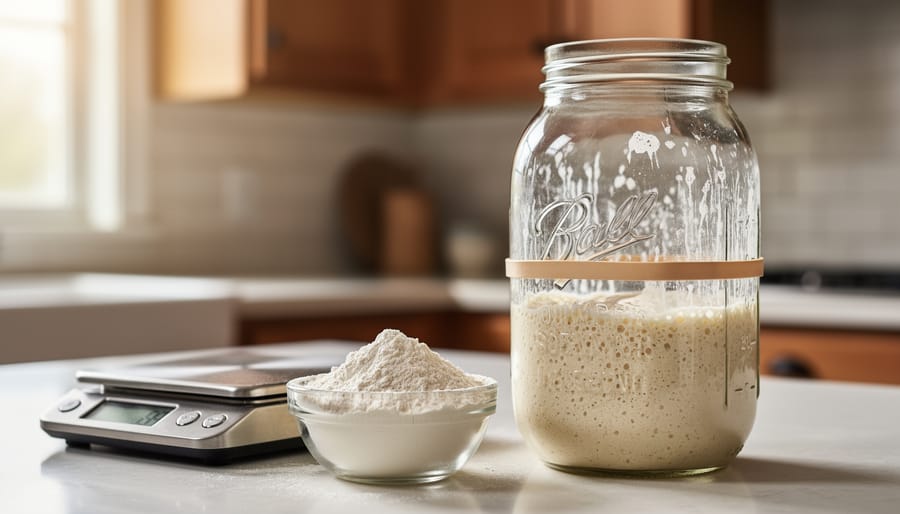
You’ll need an active starter, so if yours has been sitting in the fridge, feed starter a day ahead and you’re set.
Below, you’ll find seven seed mixes, from a classic sunflower and flax blend to an everything mix, plus a poppy and sesame topping. They’re a handy way to use up the half-empty seed bags hiding in your cupboard.
How These Seed Mixes Were Chosen (and Why Soaking Matters)
Not every seed belongs in a sourdough loaf, so here’s how the seven mixes in this list were chosen. I didn’t bake them all side by side for this article. Instead, they come from the seeds home bakers reach for most often in seeded sourdough recipes: flax, sunflower, poppy, chia, pumpkin and sesame, with fennel and black sesame as aromatic extras.
I leaned toward seeds you can easily pick up at a Canadian grocery store or scoop from a bulk bin, since you can buy just a few spoonfuls instead of a whole bag. I also looked for a good balance of crunch, nuttiness and flavour, and for combinations that help you use up the small amounts of leftover seeds hiding at the back of the cupboard. That last part matters most to us at Food Back, because a loaf is a great way to keep pantry staples out of the compost.
Now for the step that makes the biggest difference: soaking. Dry seeds act like tiny sponges, and if you add them straight to the dough, they pull moisture out of it. Soaking them in water first keeps your dough from turning stiff and your crumb from drying out. You can soak them overnight or for just a few hours before baking. A good starting point is about 2/3 water relative to the quantity of seeds you plan to use. Seeds that soak up water, like flax and chia, get especially soft and gel-like, which is exactly what you want.
Getting this prep out of the way ahead of time also makes baking day feel much calmer.
1. Sunflower and Flax: The Classic Everyday Mix
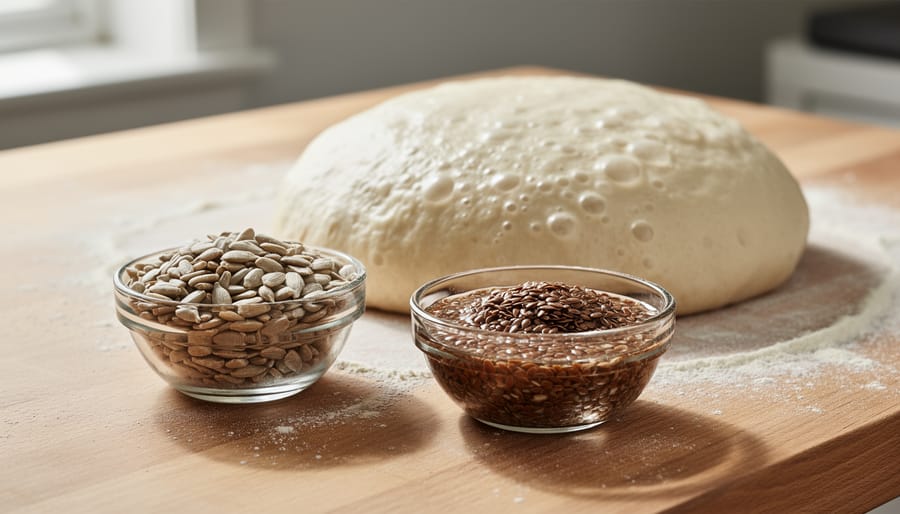
If you’re new to seeded sourdough bread, start here. Sunflower seeds bring a mild, buttery nuttiness, while brown flaxseed (also sold as linseed) adds an earthy flavour that rounds it out. Neither one overpowers the tang of the loaf, which makes this blend forgiving for a first try.
Flax is the reason soaking matters most in this mix. The seeds drink up water fast, so if you add them dry, they’ll quietly pull moisture out of your dough and leave you with a tighter crumb. Soak them for a few hours or overnight, using about 2/3 water to the quantity of seeds, and they’ll stay out of the dough’s way.
This mix also suits anyone who likes a soft sourdough sandwich loaf with a little texture, since the sunflower seeds give a gentle bite without making the slices crumbly.
Best of all, both seeds are easy to find in Canadian grocery stores and bulk bins. Got a quarter bag of sunflower seeds hiding in the cupboard? Toss it in with a spoonful of flax and give it a job.
2. Pumpkin, Sunflower and Linseed: The Hearty Rustic Mix
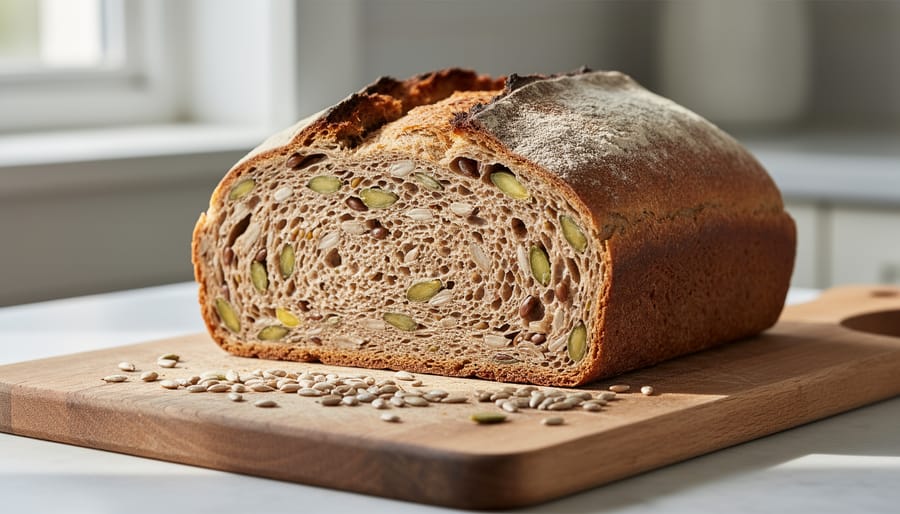
This is the mix for bakers who want a proper rustic loaf. Pumpkin seeds, sunflower seeds and linseed give you a chunky, wholesome crumb, and the green, golden and dark flecks look great when you slice into the crust.
Flavour-wise, it’s nutty and a little earthy. Sunflower seeds bring a mild sweetness, pumpkin seeds add a deeper, toasty note, and linseed rounds things out with a soft, almost grassy richness. Texture is where this mix shines: you get a satisfying bite in every slice without the loaf feeling heavy.
It’s a natural fit for sandwich loaves, since the crumb holds up to fillings, and it makes seriously good toast. The edges crisp up and the seeds turn even more fragrant.
Pumpkin seeds are bigger than the others, so a quick rough chop is an option if you’d like more even distribution, but it isn’t required. Whole works fine. As with any seeded loaf, soak the seeds in water first so they don’t draw moisture out of your dough.
3. Sesame and Flax: The Light, Nutty Mix
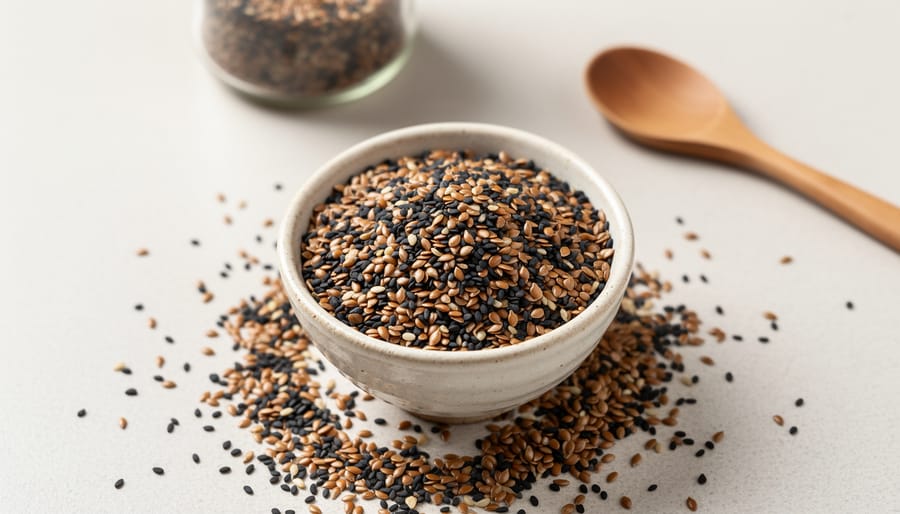
If you’ve only got a spoonful or two of each seed rattling around the pantry, this is the mix for you. Sesame and flax is a simple two-seed pairing that doesn’t ask for much of either.
Use black sesame or lightly toasted sesame seeds alongside brown flaxseed. Toasting the sesame in a dry pan for a minute or two brings out a warm, toasty aroma that carries right through the bake. Black sesame gives you the prettiest result, since the dark seeds and the flecks of brown flax create a speckled crumb that looks far fancier than the effort involved.
Flax soaks up a lot of water, so don’t skip the soak. Cover the seeds with water, using about 2/3 water relative to the quantity of seeds, and leave them for a few hours or overnight. Then fold them in with the first or second fold, once the gluten has built up.
The flavour is gentle and nutty, so it won’t overpower the tang of the sourdough.
4. Sunflower, Black Sesame, Flax and Fennel: The Aromatic Mix
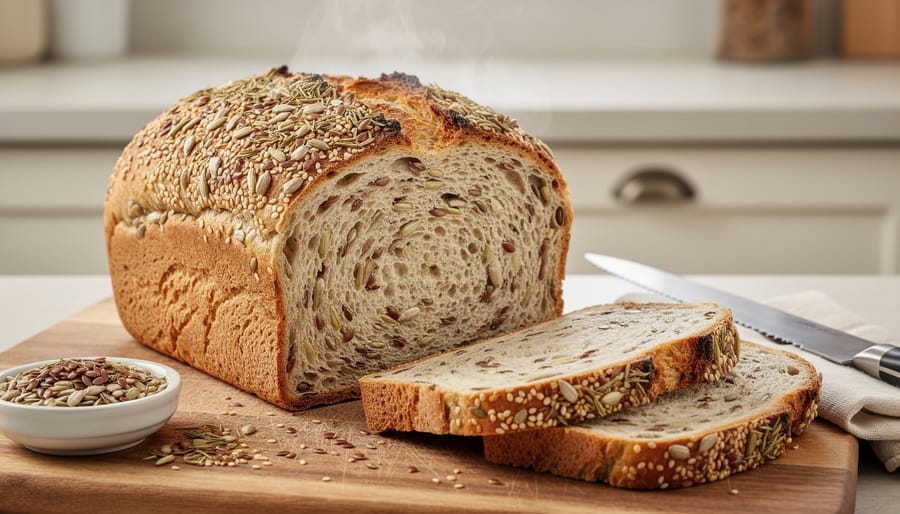
If you want a loaf that tastes a little more grown-up, this is the one. Sunflower seeds bring a mild nuttiness, black sesame adds a toasty depth, and brown flax gives an earthy chew. The fennel is what sets it apart.
Whole fennel seed has a gentle, sweet, almost savoury note, like a hint of licorice without the punch. It plays nicely against the tang of sourdough, so each bite feels rounder and more interesting than a plain seeded loaf. Toast a slice and serve it alongside a sharp cheddar, or tear off a piece to dunk into a bowl of soup.
Not sure how you’ll feel about fennel? Start small. A teaspoon or two in the mix is plenty for your first go, and you can add more next time once you know you like it. Soak everything together before folding it in, just like the other mixes. Any half-empty bags of sunflower or sesame lurking in the cupboard are perfect candidates here, so this loaf is a tasty way to clear a little shelf space.
5. Pumpkin, Sunflower, Linseed, Poppy, Sesame and Fennel: The Everything Mix
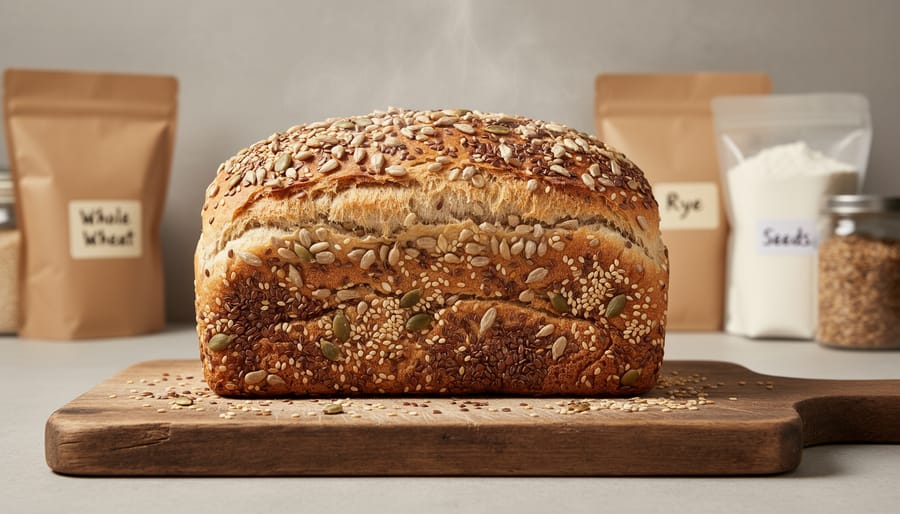
This is the mix for clearing the cupboard. Pumpkin, sunflower, linseed, poppy, sesame and fennel seeds all go into one loaf, so a few tablespoons from each half-empty bag adds up to something that looks like it came from a bakery. You get layers of crunch in every slice: the chew of pumpkin and sunflower, the tiny pop of poppy and sesame, and a soft, sweet whisper of fennel in the background.
Treat this as a flexible template, not a strict recipe. If you’re short on poppy seeds, add a little more sesame. If fennel isn’t your thing, leave it out or use just a pinch. The goal is to use what you already have, so nothing sits in the pantry until it goes stale.
Soak the whole mix together in water before it goes into the dough, either for a few hours or overnight. Then fold it in after the gluten has built up. Because the mix has so many seeds, a good soak matters here, since it keeps them from pulling moisture out of your loaf.
6. Chia and Sunflower: The Soft-Crumb Mix
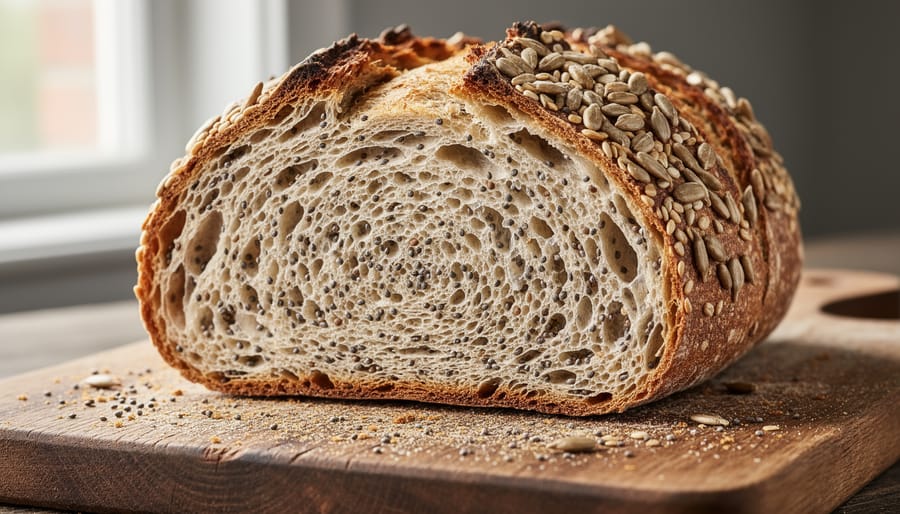
If you like a softer loaf, chia and sunflower is the mix to reach for. Chia is a good one to soak ahead because it turns into a thick gel in water, and that gel helps hold moisture in the crumb so it stays tender instead of dry. Sunflower seeds do the opposite job, adding a little bite and a mild, nutty flavour so the bread doesn’t feel one-note.
Soak both together in water for a few hours or overnight, using about 2/3 water relative to the quantity of seeds. Then fold them in with your first or second fold, once the gluten has built up.
This one is a great fit if there’s a bag of chia left over from smoothies or baking. A small amount goes a long way, so it’s an easy way to finally use up that half-empty pouch rather than letting it sit at the back of the cupboard.
7. Poppy and Sesame Topping: The Seeded Crust Finish
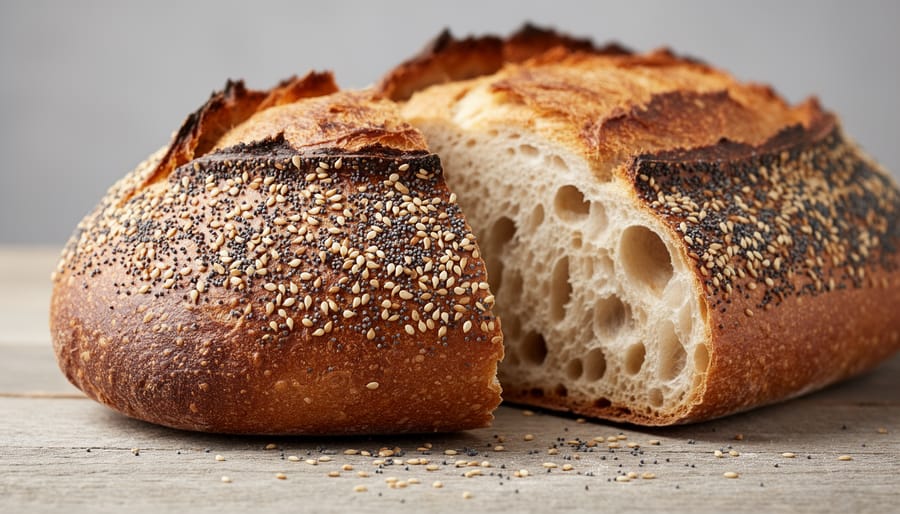
Not every loaf needs seeds folded through the crumb. Poppy and sesame seeds work beautifully on the outside, pressed onto the dough just before baking. You get a speckled, bakery-style crust with a light, toasty crunch, and the inside stays soft and familiar.
That makes this the gentlest way into seeded sourdough bread. If you’re nervous about soaking and folding, start here. It also works as an add-on to any of the six mixes above, giving a loaf that’s seeded inside and out.
The method is simple. Brush or mist the shaped dough with a little water, then roll it in a shallow tray of seeds, or sprinkle them over the top and press lightly so they stick. Because they sit on the crust and bake in the oven’s dry heat, these seeds need no soaking at all.
It’s also a handy way to use up the last spoonfuls from a nearly empty jar, which is one small way to save food from wasting in your own kitchen.
How to Fold Seeds Into Your Dough Without a Mess
Seeds go in at the right moment, or they end up clumped in one corner of the loaf. The trick is patience: let the gluten build first, then add the seeds once the dough has strengthened.
Before you start, drain your soaked seeds well. Tip them into a sieve and give it a good shake, so extra water doesn’t loosen the dough. Then stretch the dough out gently on the counter or in the bowl, scatter the seeds over the surface, and fold it over itself. Do this with the first or second fold, not before.
- Build the gluten first so the dough can hold the seeds.
- Drain the soaked seeds thoroughly.
- Sprinkle the seeds over the stretched dough.
- Fold a couple more times to work them in.
- Look for an even spread by the end of bulk fermentation.
After a couple more folds, the seeds should be evenly dispersed by the time bulk fermentation wraps up. If a few look stubborn, don’t panic. The next folds will keep nudging them into place.
Cleanup is easy if you keep waste in mind. Scoop any stray seeds from the counter back into the bowl, or save them to press onto the crust as a topping, like the poppy and sesame finish. Nothing goes in the bin. Once the dough is shaped, you can even bake without a dutch oven using what you already have in the kitchen.
Seeded Sourdough Questions Home Bakers Ask
Most of the questions bakers ask about seeded loaves come back to soaking, timing and using up what’s left in the cupboard. Here are the answers in plain language.
Do I have to soak the seeds, and for how long?
Yes, soaking is worth the small effort. Dry seeds can pull moisture out of your dough, so cover them with water first, using about 2/3 water relative to the amount of seeds. A few hours works, or leave them overnight.
Can I use any seeds?
Just about any of the usual suspects work: flax, sunflower, poppy, chia, pumpkin and sesame. Pick whichever mix from this list matches what’s already in your pantry.
When do I add the seeds to the dough?
Add them with the first or second fold, once the gluten has developed and the dough feels stronger. A couple more folds after that will spread them evenly by the end of bulk fermentation.
How can I use up small amounts of leftover seeds?
The Everything Mix is built for this. Combine the odds and ends of several bags, or sprinkle a spoonful of poppy and sesame on top as a crust finish.
How do I keep seeded bread from going stale?
Wrap the loaf well once it has cooled, or slice and freeze it so you can toast what you need. If the ends do go stale, turn them into croutons or breadcrumbs instead of tossing them.
If you’re unsure where to start, the Sunflower and Flax mix is the easiest first loaf. Once you’ve got the soak-and-fold rhythm down, swapping in whatever seeds you have on hand becomes second nature.
Your Next Loaf: Pick a Mix and Get Folding
Look at what’s already sitting in your cupboard and let that choose your mix. That half-empty bag of sunflower seeds and the flax you bought for a smoothie are all you need for a first loaf. Soak them ahead of time, fold them in once the gluten has built up, and you’ll get that rustic, nutty crunch without letting pantry staples go to waste.
Start simple with a two-seed blend, then get curious. Swap in what you have, add a pinch of fennel, or press poppy and sesame onto the crust. Every loaf teaches you something, and the seeds are already waiting in your cupboard.