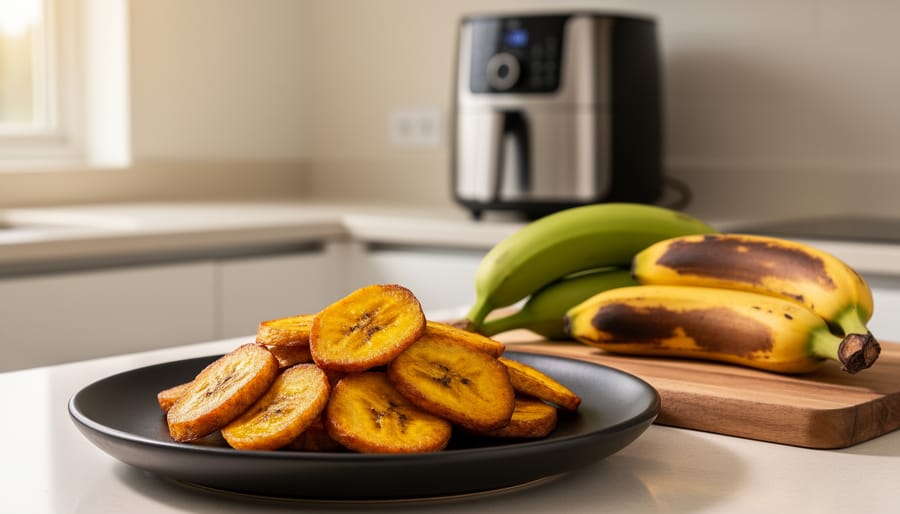
Air frying transforms plantains into crispy, golden snacks in just 10 to 12 minutes at 400°F using a fraction of the oil traditional deep frying requires. Whether you’re working with green, yellow, or fully ripe plantains, this method delivers consistently delicious results while cutting down on both cooking oil and food waste. The air fryer’s rapid circulation crisps the exterior beautifully while keeping the inside tender, and you’ll only need a light spray or brush of oil to achieve that satisfying crunch.
For eco-conscious Canadian home cooks, this technique offers flexibility you won’t find with deep frying. You can rescue plantains at any stage of ripeness, from firm green ones destined for savory applications to spotted overripe specimens that might otherwise go to waste (the same waste-reduction approach that makes it worthwhile to dry fruit before it spoils). Green plantains develop a satisfying starchy bite similar to thick-cut fries, while ripe yellow and black plantains caramelize into naturally sweet treats without added sugar. The method scales beautifully for quick weeknight snacks or larger batches for gatherings, and cleanup takes minutes since you’re not dealing with pots of used cooking oil.
This guide walks you through precise temperatures, timing, and seasoning variations so you can confidently make air fryer plantains that match your taste preferences and whatever stage of ripeness you have on hand.
What You’ll Need to Air Fry Plantains
You need just a few basic items to air fry plantains, and chances are you already have most of them in your kitchen. This accessibility makes the technique perfect for using up commonly wasted food without investing in specialty equipment or hard-to-find ingredients.
- Air fryer, any standard model with a basket works fine
- Plantains, yellowish-green for savory, riper yellow-to-black for sweet
- Oil, avocado oil or cooking spray for a light coating
- Salt, for seasoning savory versions
- Optional spices, cinnamon, nutmeg, allspice, or cloves for sweet variations
- Optional sweetener, sugar or a healthier substitute if you want extra sweetness
The plantains themselves are the star ingredient. You don’t need perfect, store-fresh specimens either. Plantains at various ripeness stages work beautifully, which means you can rescue fruit that might otherwise end up in the bin because it’s too soft or spotted for other uses.
For oil, a light spray or drizzle is all you need. Avocado oil handles high heat well, but any neutral cooking oil works. You’re using a fraction of what deep frying demands, cutting down on both oil waste and cleanup hassle. If you’re going sweet, grab cinnamon from your spice rack. For savory, salt and garlic powder do the job. Most Canadian kitchens stock these basics, making this recipe approachable even if you’re trying air frying for the first time.
Choosing the Right Plantain and Why It Matters for Waste Reduction
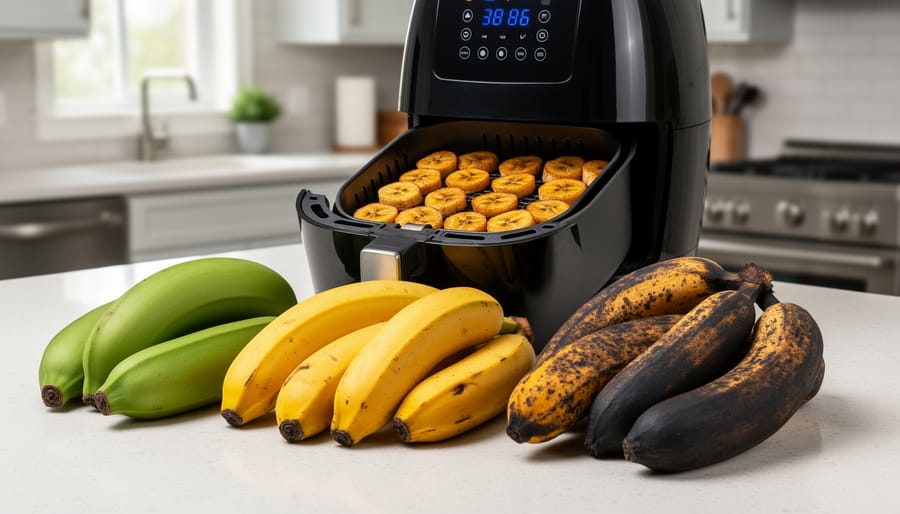
Plantains aren’t like bananas where you have a narrow window before they go bad. You can air fry them at nearly any ripeness stage, which makes them incredibly forgiving and waste-friendly. If your plantains are yellowish green with minimal black spots, they’re perfect for savory preparations. At this stage, they’re starchy and firm, so they crisp up beautifully with salt, garlic powder, or a squeeze of lime. As plantains ripen and turn yellow with increasing black spots, or even fully black, they become sweeter and softer, making them ideal for sweet versions with cinnamon or other warm spices. This flexibility is the key to waste reduction.
Instead of throwing out plantains because they’ve passed “perfect” ripeness, you can simply adjust your seasoning approach. That nearly black plantain sitting on your counter isn’t waste, it’s a sweet snack waiting to happen. This adaptability aligns perfectly with reducing kitchen waste, one of the easiest ways Canadian home cooks can prevent good food from ending up in the trash simply because it doesn’t look supermarket-perfect anymore.
Safety and Setup Tips Before You Start
Before you start cooking, set your air fryer on a stable, heat-resistant surface away from walls or cabinets. Heat rises during operation, so give it space to vent properly. Check that the basket slides in and out smoothly, no wobbling or forcing.
Preheat your air fryer to 400°F for about three minutes. This step ensures even cooking from the moment you add the plantains. While it heats, arrange your sliced plantain rounds in a single layer without overlap. Crowding the basket traps steam and leads to soggy results instead of the crispy texture you want.
Handle the basket carefully when flipping plantains halfway through. The metal gets hot, and those golden rounds are sizzling. Use silicone-tipped tongs to avoid scratching nonstick surfaces. After cooking, let plantains cool for a minute or two before serving, they hold heat longer than you’d expect and can burn your tongue if you dive in too quickly.
Step-by-Step: How to Air Fry Plantains
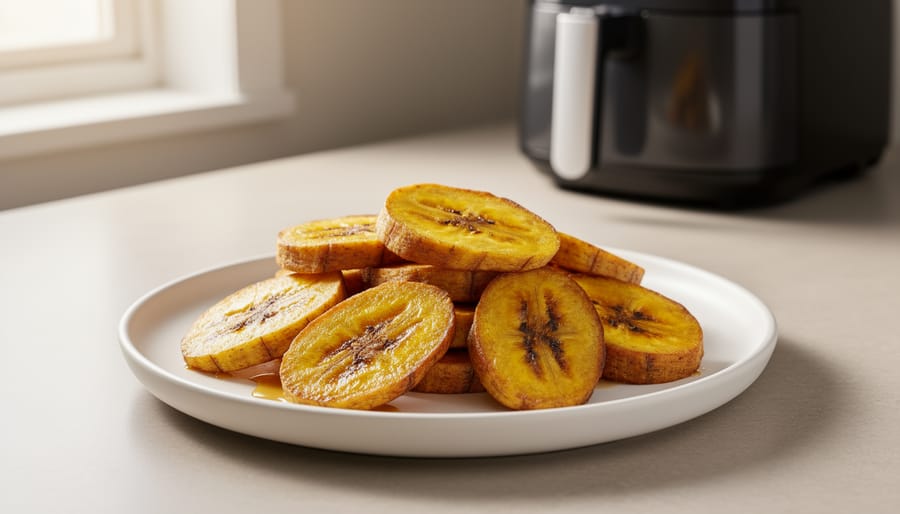
Air frying plantains is faster than you probably expect, and the process itself couldn’t be simpler. The entire method takes around 15 minutes from start to finish, making it an ideal weeknight side or quick snack. Here’s how to do it:
- Peel the plantain by cutting off both ends, then scoring the skin lengthwise with a knife. The skin should lift away easily. Slice the peeled plantain into rounds about 1 inch thick. Consistent thickness ensures even cooking.
- Lightly coat each slice with oil. You can use a spray oil for even coverage, or brush on a small amount of avocado oil. The goal is a thin, even layer, not a heavy coating.
- Arrange the plantain rounds in a single layer in your air fryer basket. Avoid overlapping or crowding the slices, as this creates steam pockets that prevent crisping. If you’re working with multiple plantains, cook them in batches rather than stacking.
- Set your air fryer to 400°F and cook for 10-12 minutes. The exact time depends on your air fryer model and how crispy you like your plantains.
- Flip the slices halfway through cooking, around the 5 or 6 minute mark. This ensures both sides brown evenly and develop that golden, caramelized exterior.
- Remove the plantains when they’re golden brown with crispy edges. The inside should be tender, and the outside should have a slight crunch.
That’s it. No messy pans of hot oil, no splatter cleanup, and you’re done in the time it takes to set the table. The air fryer does most of the work while you handle other tasks. If you’re new to cooking plantains, this method removes most of the guesswork, just watch for that golden color and you’ll know they’re ready.
Sweet and Savory Seasoning Variations for Canadian Tastes
Sweet Plantain Seasonings
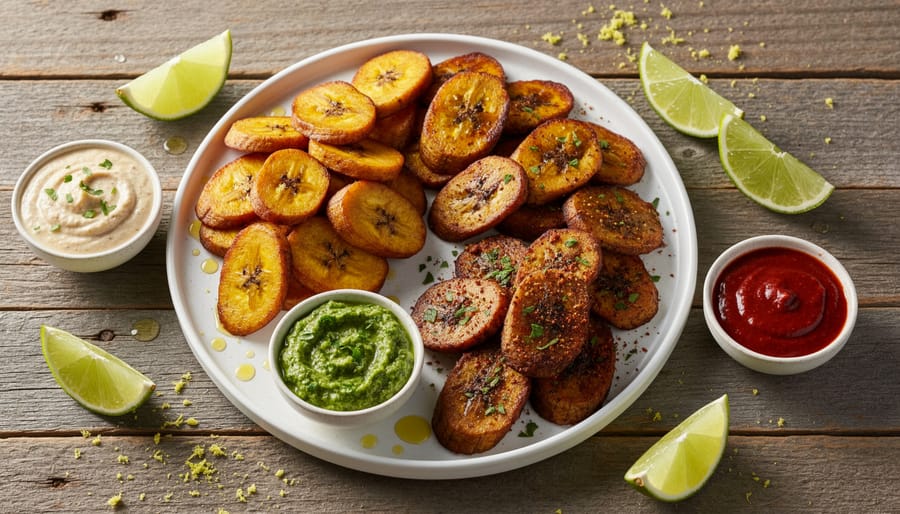
For sweet plantains, the classic pairing is cinnamon and sugar. Sprinkle about half a teaspoon of cinnamon and one teaspoon of sugar over your plantain slices before air frying, or toss them in the mixture after cooking for a dessert-like treat. If you’re watching sugar intake, swap regular sugar for a healthier substitute like coconut sugar, stevia, or monk fruit sweetener.
Want to switch things up? Try warm spice alternatives that feel right at home in a Canadian kitchen. Nutmeg brings a cozy, slightly sweet flavor that pairs beautifully with the plantain’s natural caramelization. Allspice offers a complex, warming note reminiscent of holiday baking. Cloves add a bold, aromatic kick, though use them sparingly since their flavor is intense. You can mix and match these spices with a touch of vanilla extract or a drizzle of maple syrup for a truly Canadian twist on air-fried plantains.
Savory Plantain Seasonings
For a savory spin, start with a base of salt and work from there. A light sprinkle brings out the plantain’s natural flavor without overwhelming it. Add garlic powder for depth, about half a teaspoon per two plantains works well. If you like heat, dust on chili powder or cayenne before air frying, or squeeze fresh lime juice over the hot slices right after they come out of the basket.
Savory air-fried plantains pair beautifully with Canadian comfort meals. Serve them alongside grilled chicken or fish for a twist on roasted vegetables, or toss them into a grain bowl with beans and greens. They also work as a stand-in for potato wedges at dinner, giving you a different texture and flavor that keeps weekly menus interesting and prevents the same-old-side-dish fatigue that leads to wasted ingredients.
How to Tell When Your Plantains Are Done and What to Do Next
Your plantains are ready when they turn golden-brown with crispy edges and a tender center that yields easily to a fork. The surface should look slightly caramelized, especially if you’re working with riper fruit. Check both sides, since you flipped them halfway through, each should have even color and texture.
If your plantains come out underdone, still firm or lacking color, pop them back in for another 2-3 minutes and check again. Overdone slices will look dark brown or burnt at the edges; for your next batch, shave off a minute or two from the cook time. Every air fryer runs slightly differently, so adjust based on what you see.
Once they’re done, you’ve got options. Eat them warm as a quick snack on their own, or pair them with yogurt, guacamole, or a simple salsa for extra flavor. Toss them into salads, grain bowls, or alongside eggs for breakfast. They work as a side dish for almost any meal. Leftovers can be stored in an airtight container in the fridge for up to three days, just reheat them in the air fryer for a minute to restore crispness, or freeze them for later use, preventing waste and giving you a ready-made snack whenever you need it.
Why Air Frying Plantains Cuts Down on Kitchen Waste
Air frying plantains delivers real waste reduction in three key ways. First, the method slashes oil consumption compared to deep frying, you only need a light coating of spray oil or a brushed tablespoon, rather than cups of frying oil that eventually degrade and require disposal. That means fewer plastic oil bottles heading to recycling and less oil going down the drain or into landfill. Second, air frying rescues plantains at any ripeness stage, turning produce that might otherwise be tossed into a delicious snack or side dish. Overripe plantains with dark spots work beautifully for sweet versions, while firmer yellow-green ones suit savory preparations, which helps save food from wasting simply because it passed the perfect window. Third, leftover air-fried plantains store well in the fridge for up to three days or freeze for later use in smoothies, grain bowls, or as toppings, giving you more ways to use food scraps and stretch your grocery budget. This approach fits Food Back’s mission of keeping good food out of the bin through accessible kitchen techniques that require no special equipment or expertise, just your air fryer and plantains you already have on hand.
Common Questions About Air Fryer Plantains
Can you air fry frozen plantains, or do you need to thaw them first? Yes, frozen plantain slices work fine, just add two or three extra minutes to the cooking time and skip the thawing step. This saves time and prevents waste if you’ve frozen overripe plantains you couldn’t use immediately.
How should I store leftover air-fried plantains?
Keep them in an airtight container in the fridge for up to three days. Reheat in the air fryer at 375°F for two to three minutes to restore crispness, or eat them cold as a quick snack.
Can I cook multiple batches without cleaning the basket each time?
Absolutely. Just shake out any loose bits between batches and keep going, the basket doesn’t need a full wash until you’re done cooking for the day.
What if I don’t have an air fryer?
Use your oven instead: arrange plantain slices on a parchment-lined baking sheet, lightly coat with oil, and bake at 425°F for 15-18 minutes, flipping halfway through. The texture won’t be quite as crispy, but it’s a solid alternative.
How can I repurpose leftover air-fried plantains?
Chop them up and toss into salads, grain bowls, or soups for added texture and sweetness. You can also mash leftovers into pancake batter or freeze them for smoothies.
These answers address the most common roadblocks Canadian home cooks face when trying this method. The frozen plantain option is especially useful if you’ve stocked up during a sale or rescued bruised fruit from the discount rack. Storing and reheating properly means you can prep a larger batch on Sunday and enjoy crispy plantains all week without extra effort or waste. And if your air fryer is packed away or broken, the oven method keeps you in the game, you’ll use a bit more energy, but you’ll still rescue those plantains and avoid throwing them out.
Air frying plantains is one of the simplest ways to turn overlooked or overripe fruit into something delicious while cutting down on waste in your kitchen. Whether you’re working with green plantains for a savory side or spotty-black ones destined for the compost, this method gives you flexibility and uses a fraction of the oil compared to deep frying. Experiment with different ripeness levels and seasonings to find what works for your household, and remember that small changes like these add up. By rescuing produce that might otherwise be tossed and reducing unnecessary oil waste, you’re contributing to a more sustainable food system right from your own home. Every batch of air-fried plantains is a step toward less waste and more creativity in the kitchen.