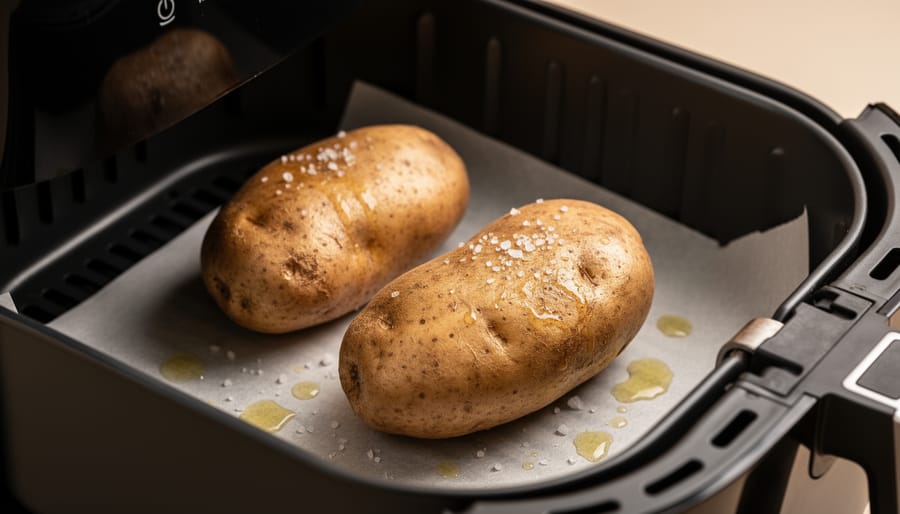
Perfect air fryer baked potatoes take 40 to 45 minutes at 400°F, delivering crispy skin and fluffy interiors without heating up your kitchen or wasting energy. You’ll use about 50% less electricity than a conventional oven, and the results are consistently better: evenly cooked potatoes with that satisfying crunch you’re after.
The method is straightforward. Scrub two medium russet potatoes, poke each one six to eight times with a fork, rub with a light coat of oil, season with kosher salt, and place them directly in your preheated air fryer basket. No foil wrapping, no flipping halfway through. The circulating hot air does all the work while you get on with dinner prep.
For Canadian home cooks looking to cut energy costs and reduce kitchen waste, this technique checks every box. Your potatoes cook faster than in a full-size oven, you’re not tossing out burnt skins or undercooked centers, and you can easily scale the recipe up or down based on what you actually need. The key to perfection is hitting an internal temperature of 205°F, which you can verify with a simple kitchen thermometer. Once you’ve nailed this basic method, these potatoes become the foundation for quick weeknight meals, loaded potato bars, or smart leftover planning that keeps food out of the bin.
Why Air Fryer Baked Potatoes Are a Smarter Choice
Switching from your oven to an air fryer for baked potatoes isn’t just about convenience, it’s a practical choice that saves time, energy, and money. A conventional oven takes 60 to 75 minutes to bake a potato, while an air fryer delivers the same crispy skin and fluffy interior in just 40 to 45 minutes. That 20 to 30-minute difference adds up when you’re cooking multiple times a week, especially during busy weeknights.
The energy savings matter too. Air fryers use roughly half the electricity of a full-sized oven because they heat a much smaller space and reach temperature faster. You’re not warming up a massive cavity just to cook two potatoes. For Canadians looking to trim their utility bills and lower their environmental impact, small shifts like this add up over time. In warmer months, keeping the big oven off also means less heat in your kitchen, which can reduce the load on your air conditioning.
This method also aligns perfectly with reducing food waste. When you cook whole potatoes quickly and easily, you’re more likely to use them before they sprout or spoil in the pantry. And because air fryer baked potatoes reheat beautifully, leftovers become the foundation for tomorrow’s meals rather than something you toss out. Understanding how food waste harms the planet makes these everyday cooking choices feel more meaningful, you’re not just saving time, you’re actively shrinking your carbon footprint with each meal.
What You’ll Need
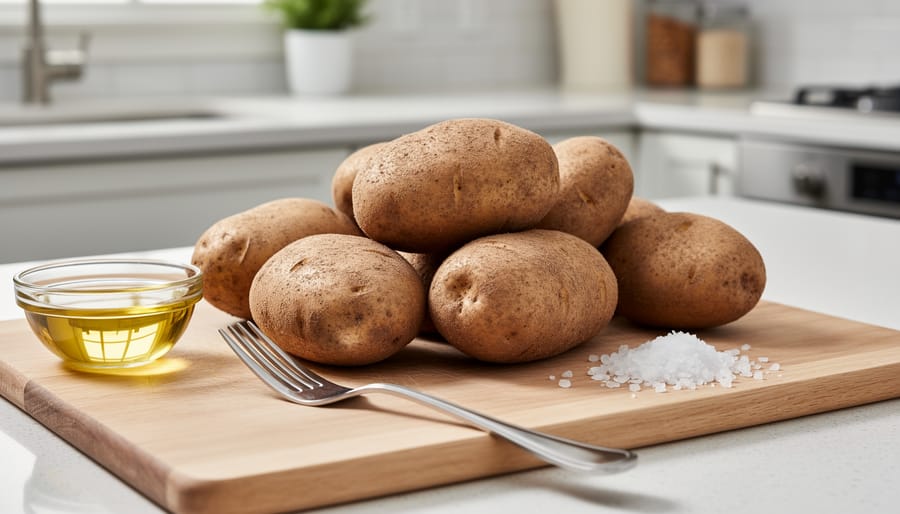
You don’t need a fancy kitchen setup to pull this off. The beauty of air fryer baked potatoes is their simplicity, just a handful of basics you probably already have. Here’s everything required:
- Air fryerAny model works, from compact 2-quart units to larger family-sized baskets
- 2 medium russet potatoesRussets deliver that classic fluffy interior Canadians know from traditional baked potatoes, and they’re widely available year-round at grocery stores nationwide
- OilAbout 1/2 teaspoon per potato (olive oil, avocado oil, or vegetable oil all work)
- Kosher saltFor coating the skin and creating that crispy, savoury crust
- ForkTo poke holes and let steam escape during cooking
- Instant-read thermometer (optional)Takes the guesswork out of doneness; 205°F internal temp gives you the fluffiest results
That’s it. No special attachments, no expensive gadgets, no hard-to-find ingredients. Russet potatoes are ideal here because their high starch content creates that light, fluffy texture when cooked through, and their thick skin crisps beautifully in the circulating hot air. If you’ve got your air fryer and a couple of potatoes, you’re already set to start.
Before You Start: Prep Tips and Safety Notes
A few minutes of prep before you start will save you from common mistakes and help you nail that crispy-yet-fluffy texture every time.
First, give your potatoes a good scrub under running water. You’re eating the skin, so you want to remove any dirt, debris, or waxy residue. A vegetable brush works well, but clean hands and a bit of friction do the job just fine. Once they’re clean, pat each potato completely dry with a clean kitchen towel. Wet skin won’t crisp properly, and you’ll end up with a soggy exterior instead of that satisfying crunch.
Next, make sure your potatoes have room to breathe. Place them in the basket with at least half an inch of space around each one. If they’re touching, the hot air can’t circulate evenly, and you’ll get soft spots instead of all-over crispness. Depending on your air fryer’s size, you might need to cook in batches if you’re making more than two or three potatoes.
Finally, preheat your air fryer to 400°F for three minutes before adding the potatoes. This step ensures consistent heat from the start and helps lock in that crispy skin texture right away.
Step-by-Step: How to Air Fry a Baked Potato
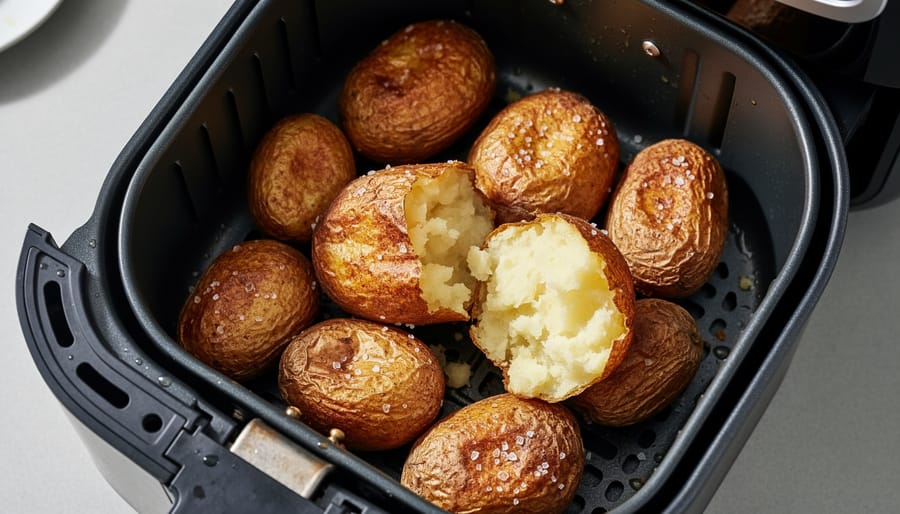
Here’s the exact process that’ll give you restaurant-quality baked potatoes every single time. I’ve tested this method dozens of times, and it works whether you’re making a quick weeknight dinner or meal-prepping for the week ahead.
- Preheat your air fryer to 400°F for 3 minutes. This step matters more than you’d think because it creates an immediate sear on the potato skin, locking in moisture while the outside crisps up.
- Scrub 2 medium russet potatoes under cold running water, using your hands or a vegetable brush to remove all dirt and debris. Pat them completely dry with a clean kitchen towel. Any lingering moisture will steam the skin instead of crisping it.
- Grab a fork and poke each potato 6 to 8 times, piercing deep enough to reach the center. These vents allow steam to escape during cooking. Skip this step and you risk a potato explosion in your air fryer.
- Rub each potato with 1/2 teaspoon of oil, coating the entire surface. I use olive oil or avocado oil, but any neutral oil works. Then coat generously with kosher salt, pressing it into the skin so it sticks. This creates that crispy, salty crust you’re after.
- Place the potatoes directly in the air fryer basket with at least an inch of space around each one. Don’t let them touch, and definitely don’t wrap them in foil. The circulating hot air needs room to work its magic on all sides.
- Air fry at 400°F for 40 to 45 minutes without opening the basket or flipping. Medium potatoes typically need 35 to 40 minutes, while larger ones require 45 to 50 minutes. Resist the urge to check too early because you’ll release heat and extend cooking time.
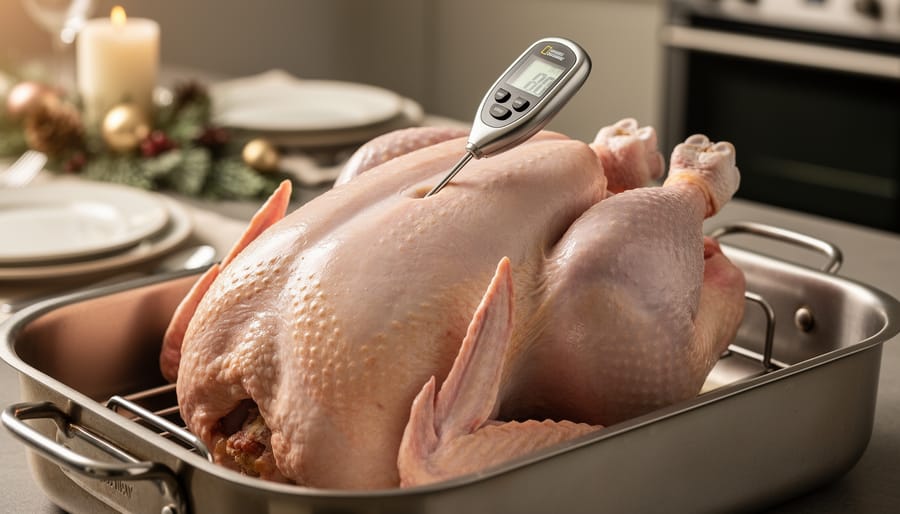
- Test for doneness by inserting a fork into the thickest part. It should slide in with zero resistance. For the fluffiest interior, use an instant-read thermometer to confirm the center has reached 205°F. Anything below that and you’ll have a slightly dense texture instead of that cloud-like fluff.
The potatoes will be screaming hot when they come out, so use tongs or oven mitts to transfer them to a plate. Let them rest for 2 to 3 minutes before slicing open. This brief rest allows the steam to redistribute, giving you an evenly fluffy interior from edge to edge.
How to Know When Your Potato Is Done
The fork test is your most reliable friend here. Grab a fork and poke the thickest part of the potato, if it slides in easily with no resistance, you’re good to go. The potato should feel tender all the way through, not just on the outside. Visually, you want to see crispy, golden-brown skin with a slightly wrinkled texture. That’s the air fryer working its magic.
For absolute precision, use an instant-read thermometer. Insert it into the center of the potato and look for 205°F, that’s the sweet spot for maximum fluffiness inside. Anything below 200°F means the starches haven’t fully converted, and you’ll get a firmer, less fluffy texture.
An underdone potato feels firm when you squeeze it gently (use an oven mitt) and the fork meets resistance. The skin might look pale or soft instead of crisp. If that’s the case, give it another 5 minutes and check again.
Overdone potatoes are less common, but you’ll notice overly dark, almost burnt skin and a dried-out interior. The flesh can turn mealy instead of fluffy.
If your skin isn’t crispy enough but the inside is done, toss the potato back in for 5 more minutes. If the inside is still firm, keep cooking in 5-minute increments until the fork test passes.
Serving Suggestions and Zero-Waste Toppings

Your hot, crispy potato is ready, now it’s time to load it up without loading your trash bin. The best toppings are the ones already waiting in your fridge or pantry, turning odds and ends into a satisfying meal while you use food scraps that might otherwise go to waste.
- Leftover chili or stew from earlier in the week, reheated and spooned generously over the top
- Roasted vegetable scraps, those slightly wrinkled peppers, zucchini ends, or broccoli stems you almost tossed
- Homemade herb butter made from fresh parsley, dill, or chives that are starting to wilt in the crisper
- Cheese ends or that last handful of shredded cheddar lingering in the bag
- Greek yogurt instead of sour cream for a tangy, protein-rich swap that cuts waste and adds creaminess
Classic Canadian choices like poutine-style gravy and cheese curds work beautifully here, too. If you’re plant-based, try nutritional yeast, tahini drizzle, or mashed chickpeas. The goal is simple: open your fridge, see what needs using, and turn your potato into a canvas for leftovers that deserve a second act.
What to Do with Leftover Baked Potatoes
Don’t toss those leftover air fryer baked potatoes, they’re perfect for quick meals that save food from wasting. Store cooled potatoes in an airtight container in the fridge within 2 hours and use them within 3 to 5 days.
Chop them into cubes for crispy breakfast hash browns or toss into scrambled eggs with cheese and vegetables. Cold baked potatoes work beautifully in potato salad, just dice, mix with mayo or Greek yogurt, mustard, and diced celery. For twice-baked potatoes, scoop out the flesh, mash it with butter and cheese, refill the skins, and reheat in the air fryer at 350°F for 5 to 7 minutes until crispy. You can also cube them for a quick potato soup base or slice them thin for homemade potato chips.
To reheat a whole leftover baked potato and restore its crispy skin, pop it back in the air fryer at 350°F for 5 to 7 minutes. Skip the microwave if you want to keep that satisfying crunch.
Common Questions About Air Fryer Baked Potatoes
Can I cook more than two potatoes at once? Absolutely. Your air fryer can handle three or even four medium potatoes if they fit in a single layer with space between them. The key is air circulation, potatoes shouldn’t touch or overlap, or you’ll end up with uneven cooking and soft spots where they were pressed together.
Do I need to flip the potatoes halfway through? No, and that’s one of the best parts about air frying. The circulating hot air cooks them evenly on all sides without any intervention from you. Just set the timer and walk away, no babysitting required.
Can I use potato varieties other than russet?
Yes, you can air fry Yukon Golds or red potatoes, but russets give you that classic fluffy interior because of their high starch content. Other varieties work fine but will have a slightly denser, creamier texture.
What if I don’t have an instant-read thermometer?
The fork test works perfectly well, insert a fork into the thickest part, and it should slide in with zero resistance. If you feel any firmness, give the potatoes another five minutes.
Can I reheat leftover baked potatoes in the air fryer?
Yes, and it’s actually the best way to bring them back to life. Air fry at 350°F for five to seven minutes, and they’ll taste fresh with crispy skin again.
Why shouldn’t I wrap potatoes in foil?
Foil traps steam and prevents the skin from crisping, which defeats the whole point of air frying. It can also be a fire hazard in some air fryer models that heat from the top.
What about different sizes? Adjust your timing based on potato size. Medium potatoes need 35 to 40 minutes at 400°F, while large ones require 45 to 50 minutes. When in doubt, check doneness with a fork or thermometer rather than relying solely on the clock.
Making perfect baked potatoes in your air fryer isn’t just quick and easy, it’s a small, meaningful step toward more sustainable cooking. In about 40 minutes, you’ll have crispy-skinned, fluffy potatoes that use less energy than your oven and create zero waste when you use what you’ve got on hand. The beauty of this method is how forgiving it is: poke, oil, salt, air fry, and you’re done. No need to overthink it.
Try one potato tonight. Top it with whatever’s in your fridge, save any leftovers for tomorrow’s breakfast hash, and see how satisfying it feels to cook smarter. Small changes in the kitchen add up, and this one couldn’t be simpler to start.