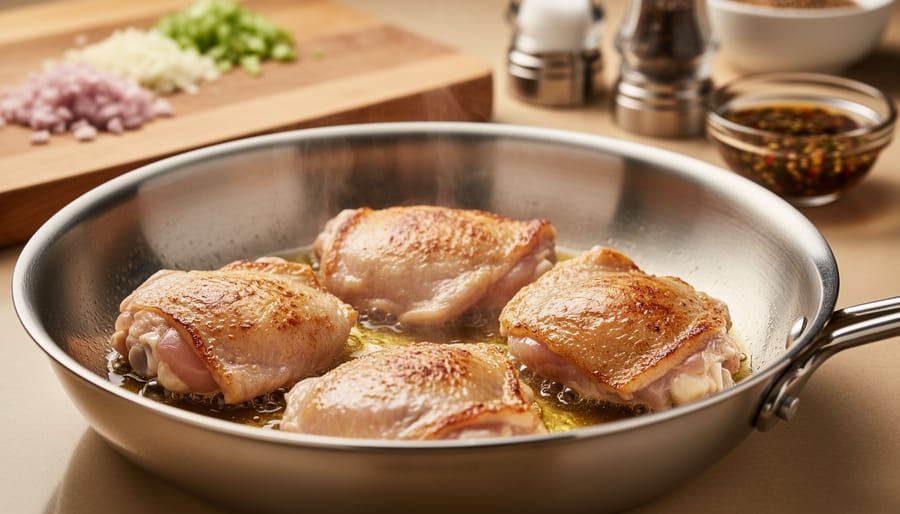
Boneless skinless chicken thighs are one of the easiest ways to get a good weeknight dinner on the table, and the method is simple: pat them dry, season them, and sear them in a hot, oiled skillet until they’re cooked through. That’s it. Most of the time, a little salt and pepper is all they need.
Why do they work so well? Thighs hold their moisture even over high heat, so they’re more forgiving than breasts if you get distracted by a phone call or a kid at the door. They also cook evenly and save time, which matters on a busy Tuesday.
From there, the ideas branch out. Toss them in a homemade marinade, simmer them in a vibrant Thai curry, brown them in butter for a Dijon mustard sauce with bacon, or take on an orange chicken. Serve any of them over white rice and you’ve got a meal.
Below, you’ll find the tools you need, a safe cooking routine, step-by-step instructions, and ways to turn leftovers and pantry odds and ends into something delicious instead of landfill.
Why Boneless Skinless Chicken Thighs Are a Smart Pick for Home Cooks
Boneless, skinless chicken thighs are one of those cuts that quietly make home cooking easier. They cook evenly, which means you’re not stuck guessing whether one end is dry while the other is still catching up. They also save kitchen time, since there’s no bone or skin to work around.
The real appeal is how forgiving they are. A boneless thigh holds onto its moisture even when it’s hit with high heat, so a busy night or a slightly distracted cook doesn’t turn dinner into something dry and chewy. Often, all you need is salt, pepper and a couple of turns in a hot oiled skillet, and you’ve got dinner on the table.
That forgiving nature matters if you care about wasting less. A dinner that goes wrong is a dinner that ends up in the bin, and one that turns out juicy is one people actually finish. It’s also easy to cook a generous batch and plan for leftovers, which is one of the simplest ways to save food from wasting at home.
Serve them over white rice, a classic pairing, or tuck them into whatever sauce, curry or marinade you’ve got in mind. Either way, the chicken does the heavy lifting.
What You’ll Need: Tools, Ingredients and Pantry Staples
You don’t need much to turn boneless skinless chicken thighs into dinner. Most of it is probably already in your kitchen, which is half the fun.
Here’s a quick checklist to gather before you start:
- A heavy skillet that holds heat well
- Tongs for flipping without piercing the meat
- A cutting board you can wash well, kept just for raw chicken
- A reliable food thermometer
- A bowl for marinating
- Salt, pepper and a neutral cooking oil
- Butter for browning
- Dijon mustard and bacon for a saucy dinner
- Marinade basics and Thai curry ingredients if you’re feeling adventurous
- White rice for serving
Thighs are forgiving, so the basics go a long way. Boneless thighs need little more than salt and pepper and a couple of turns in a hot oiled skillet to become dinner. Butter is a lovely option for browning, and it adds richness without any fuss.
The optional flavour builders are where you can have some fun. Dijon mustard and bacon turn simple chicken into something comforting, while a homemade marinade or Thai curry gives you a bolder, make-ahead option.
Here’s the waste-saving tip: raid your fridge before you shop. That half-used jar of mustard, the wilting herbs and the last handful of leftover veggies all make great add-ins. It’s an easy way to use food scraps instead of tossing them, and your dinner tastes better for it.
Safety First: Handling Raw Chicken and Knowing When It’s Done
Raw chicken is easy to handle safely once a few habits become automatic. Keep it away from ready-to-eat foods like salad greens, bread and fruit, and use a dedicated board for the chicken. Wash your hands, boards, knives and counters with hot soapy water after any contact, so you avoid cross-contamination on the way to the table.
Thaw thighs in the fridge rather than on the counter. It takes a little planning, but you can move a package from the freezer the night before you need it. And skip the rinsing: splashing water over raw chicken only spreads germs around your sink and counters, and cooking does the real work.
Know your stop conditions, too. If the chicken smells off, looks slimy, or has been sitting out too long, don’t cook it. Throwing out one questionable package is better than getting sick, and it’s the one kind of food waste worth accepting.
Once dinner is done, get leftovers into the fridge promptly in a covered container. Cooling them quickly and storing them properly keeps them safe for lunches and rice bowls later in the week, which means fewer thighs heading for the bin.
How to Cook Boneless Skinless Chicken Thighs Step by Step
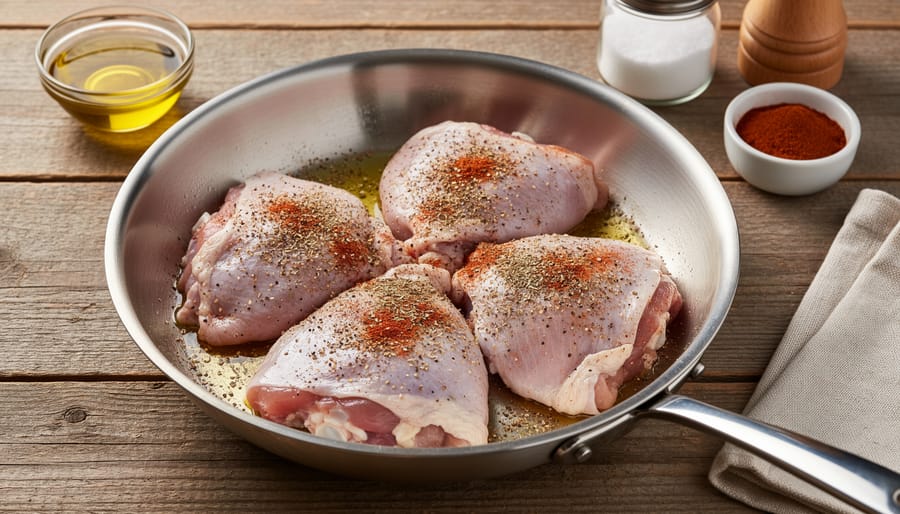
Boneless skinless thighs are about as forgiving as chicken gets. They cook evenly and hold onto their moisture even over high heat, so the method stays simple. Here’s the sequence from raw to dinner:
- Pat the thighs dry with a paper towel, then season with salt and pepper, or place them in your homemade marinade.
- Heat a skillet over medium-high heat and add a splash of oil. Wait until the pan is properly hot before the chicken goes in.
- Lay the thighs in the pan and let them sit so they pick up some colour. Give them a couple of turns as they cook, rather than flipping constantly.
- For a richer finish, brown the chicken in butter in the skillet, which adds flavour and a golden surface.
- Check doneness with a food thermometer and follow Health Canada’s guidance for safe internal temperature.
- Rest the chicken briefly, then serve with white rice or whatever sides you have on hand.
Two small habits make a big difference. First, don’t overcrowd the pan. Crowded chicken steams instead of browning, and you end up with pale, soggy thighs. If your pan is small, cook in two batches and keep the first round warm. Second, let the chicken rest before you slice it. A short pause keeps the juices in the meat instead of on the cutting board.
If your recipe includes a sauce, like the Dijon mustard sauce or the orange chicken covered below, return the chicken to the pan once it’s cooked and warm everything through together. That’s also a handy moment to toss in leftover veggies or the last spoonfuls from a jar, so nothing sits forgotten at the back of the fridge.
Most of all, trust your thermometer rather than the clock or the colour. Thickness varies from thigh to thigh, and a quick check protects both your dinner and your confidence.
Boneless Skinless Chicken Thighs Recipes to Try Tonight
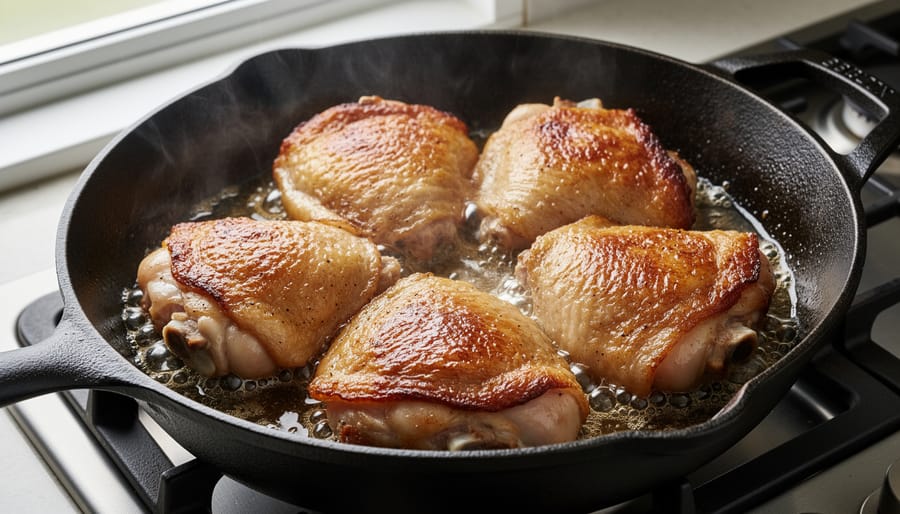
Simple Skillet Thighs with Salt, Pepper and Butter
This is the simplest way to cook thighs, and it works because boneless thighs need little more than salt and pepper and a couple of turns in a hot oiled skillet to become dinner. Season both sides, lay them in the pan, and let them brown before you move them. Add a knob of butter toward the end and spoon it over for a richer finish.
Cook a few extra while you’re at it. Plain, well-seasoned thighs slice easily into rice bowls, wraps or next-day lunches, so nothing goes to waste.
Homemade Marinade and Thai Curry Thighs
A homemade marinade is the easy make-ahead move. Mix it up, coat the thighs, and let them sit in the fridge so dinner is half done before you get home. Boneless thighs hold their moisture even over high heat, so they stay juicy after a hot skillet.
For something bolder, try a vibrant Thai curry. It’s one of the best ways to clear the veggie drawer. Wilting peppers, a lone zucchini or the last handful of greens can all go into the pot with the chicken. Serve it over white rice, a classic match.
Chicken and Bacon in Dijon Mustard Sauce and Orange Chicken
When you want something comforting and saucy, two boneless skinless chicken thigh recipes are worth a spot in your rotation. The first pairs chicken and bacon in a Dijon mustard sauce, a rich, tangy dinner that brings a savoury, smoky bite. The second is a tso’s-style orange chicken, with a sticky, citrusy sauce that clings to every piece. Both are best spooned over white rice, which soaks up the sauce. If you have a half-used jar of Dijon or leftover rice from earlier in the week, this is a great way to use them up.
Check Your Results and Make the Most of Leftovers
Before you call dinner done, run a few quick checks. A food thermometer is the only reliable way to confirm doneness, so follow Health Canada’s safe internal temperature guidance for poultry. Then look at the result:
- The thermometer reading meets Health Canada’s guidance, checked in the thickest part of the thigh.
- The chicken is juicy and cooked evenly, with no pale or rubbery patches.
- Any sauce or add-ins, like the Dijon mustard sauce or Thai curry, are warmed through.
- Leftovers go into a covered container in the fridge soon after the meal, not left out on the counter.
If something was off, adjust next time. Bland? Season earlier or marinate a little longer. Pale and steamy? Let the skillet get hotter and give the thighs more room.
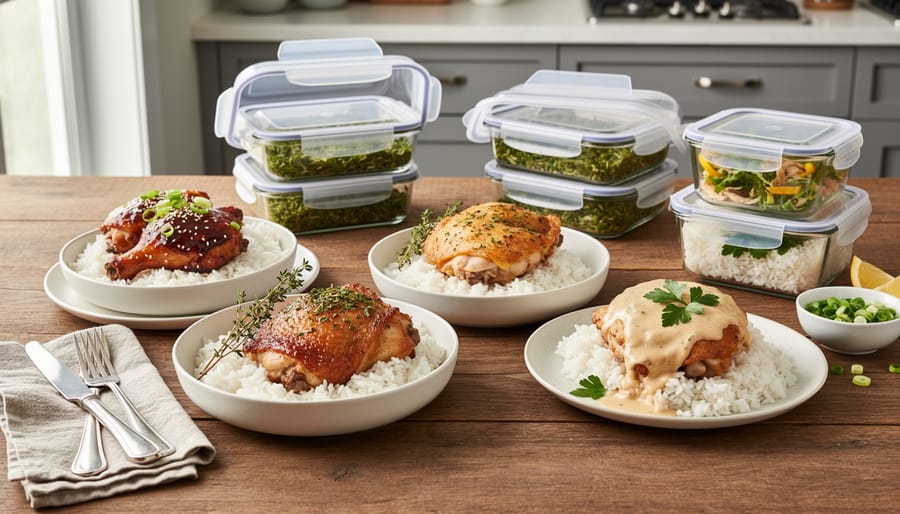
Leftovers are where thighs really pay off, because they stay moist when reheated. Slice them over white rice for a quick bowl, tuck them into a wrap, or stir them into a soup. Packed up as next-day lunches, they help you stop wasting food without any extra effort. Cook a full batch on purpose and plan for those meals, and tonight’s dinner turns into a few easy lunches.
Boneless Skinless Chicken Thighs FAQs
Do boneless skinless thighs dry out easily?
Not really. Thighs hold their moisture even over high heat, which makes them far more forgiving than breast meat. Just avoid crowding the pan and let the chicken rest before serving.
Can I marinate them ahead of time?
Yes, a homemade marinade works well for a make-ahead dinner. Keep the bowl covered in the fridge, and cook the chicken when you’re ready.
What goes well with them?
White rice is the classic partner, especially with saucy dishes like Thai curry, Dijon-bacon chicken or orange chicken. It also soaks up every drop of sauce.
How should I store leftovers?
Cool the cooked chicken, then store it in a covered container in the fridge. Use it up in rice bowls, wraps or soups so nothing gets tossed.
Thighs are a solid make-ahead choice too. Cook a batch, portion it out, and you’ve got lunches or quick dinners lined up for the week. That small bit of planning matters more than it seems. When we let good food spoil, we waste the money, the effort and the resources behind it, and the way food waste harms the planet is a good reason to finish what we cook. Keep your leftovers visible in the fridge, and they’re far more likely to get eaten.
So here’s your plan: pick one recipe this week and give it a go. Maybe it’s the simple salt-and-pepper skillet version, or maybe it’s the Thai curry that finally uses up those tired veggies in the crisper.
Boneless skinless chicken thighs are forgiving. They cook evenly, save you time, and stay moist even when the pan runs hot, so a busy night doesn’t have to mean a dry dinner. That also means less food heading to the bin, especially when you plan a few leftovers for tomorrow’s lunch.
Cook once, eat twice, and use up what’s already in your kitchen. For more ways to stretch ingredients and plan meals that work for your week, keep exploring Food Back’s tips for home cooks across Canada.