Every year, Canadians throw away nearly 2.3 million tonnes of edible food. That’s enough to fill the Rogers Centre in Toronto eight times over. But the real cost isn’t measured in stadium volumes. It’s measured in the greenhouse gases heating our atmosphere, the fresh water vanished from our lakes and rivers, and the valuable farmland degraded for nothing.
When food rots in landfills, it produces methane, a greenhouse gas 25 times more potent than carbon dioxide. If global food waste were a country, it would be the third-largest emitter of greenhouse gases after China and the United States. In Canada alone, food waste generates approximately 56.6 million tonnes of carbon dioxide equivalent annually, rivaling the emissions from 12 million cars.
The environmental damage starts long before food reaches the garbage bin. Growing food that nobody eats wastes 21 percent of all fresh water used in Canada. It squanders the energy used for planting, harvesting, transporting, and refrigerating. It means pesticides and fertilizers polluted waterways unnecessarily. Farmers cleared land, depleted soil nutrients, and used fossil fuels, all to produce meals that never happened.
Understanding these impacts isn’t about guilt. It’s about recognizing opportunity. Small changes in how we shop, store, and cook can dramatically reduce our environmental footprint while saving money. The path forward combines awareness with action, transforming how Canadian households and businesses treat food.
The Carbon Footprint of Wasted Food
When we toss out food, we’re not just wasting the meal itself—we’re throwing away all the energy, resources, and carbon emissions that went into getting that food to our plates. The environmental cost starts long before anything hits the garbage bin.
Every piece of food we discard carries a hidden carbon footprint from its entire journey. From the fuel used by tractors planting crops to the electricity powering processing facilities, from the gas trucks burn during cross-country deliveries to the energy keeping grocery store refrigerators running—all of this production, transport, and disposal releases greenhouse gases into our atmosphere. When Canadians waste food, we’re essentially burning fossil fuels for nothing.
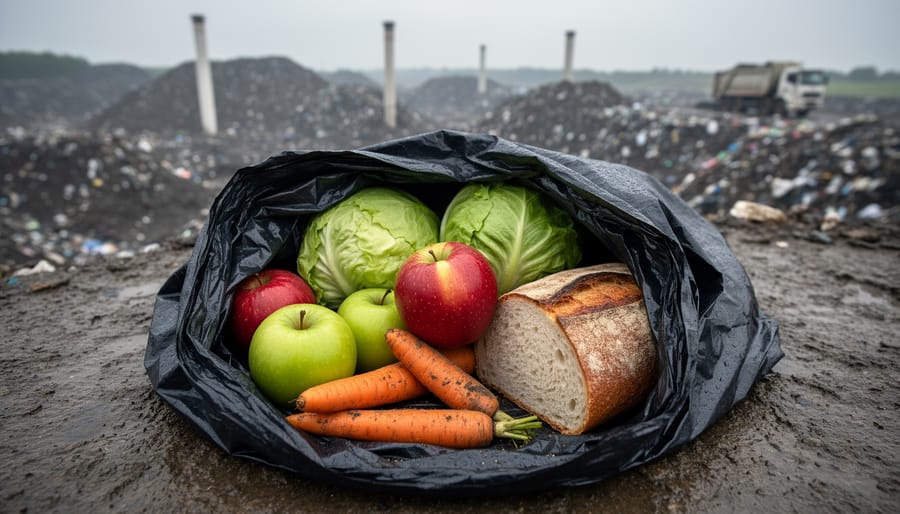
The problem gets significantly worse once discarded food reaches the landfill. Unlike composting, where food breaks down in the presence of oxygen, landfills create anaerobic conditions—meaning decomposition happens without air. This oxygen-starved environment causes rotting food to release methane, a greenhouse gas that’s roughly 25 times more potent than carbon dioxide at trapping heat in our atmosphere. In Canadian landfills, organic waste produces methane gas that accelerates climate change far more aggressively than the carbon dioxide released during food production.
Consider what this means in practical terms. That head of lettuce you forgot about in the crisper drawer? Before it wilted, it required water for irrigation, fertilizer for growth, diesel for harvesting equipment, refrigerated trucking across provinces, and climate-controlled storage at the store. All those steps released carbon into the atmosphere. When it ends up in the trash, it decomposes without oxygen and releases methane for years to come. You’ve essentially got a double hit—wasted emissions from production plus ongoing emissions from decomposition.
For Canadian households, the math is sobering. We’re collectively responsible for billions of dollars worth of food waste annually, and each kilogram carries this embedded carbon footprint. The good news? Understanding this connection is the first step toward making meaningful changes in how we shop, store, and consume food.
Water Resources Down the Drain
When we toss out food, we’re not just wasting what’s on our plate—we’re throwing away all the water that went into producing it. And the numbers are staggering. Globally, food waste accounts for trillions of gallons wasted annually, water that was used for irrigation, processing, and transporting food that never gets eaten.
Think about it this way: that tomato you forgot about in your fridge required about 13 gallons of water to grow. A single pound of beef? Over 1,800 gallons. When we waste these foods, every drop used to produce them goes down the drain too.
In Canada, where we’re fortunate to have abundant freshwater resources, it’s easy to overlook this connection. We have about 7% of the world’s renewable freshwater supply, but that doesn’t mean we can afford to be careless. Agriculture accounts for a significant portion of our water use, and the irrigation systems supporting Canadian farms from the Prairies to the Fraser Valley all depend on these precious resources.
The global picture is even more concerning. Many regions face severe water scarcity, where communities struggle to access clean drinking water while massive amounts are used to grow food that ends up in landfills. It’s an inequality that hits hard when you consider that wasted food uses about a quarter of all water consumed by agriculture worldwide.
Here in Canada, our prairie provinces know firsthand how precious water can be during drought conditions. When farmers in Saskatchewan or Alberta carefully manage every drop during dry summers, the food we waste becomes even more troubling. Their conservation efforts are undermined when the fruits of their labour—and their water—end up in the garbage.
The connection is clear: reducing food waste is also about respecting and conserving water. Every meal we save, every leftover we use, helps preserve this vital resource for communities here at home and around the world.
Land Use and Biodiversity Loss
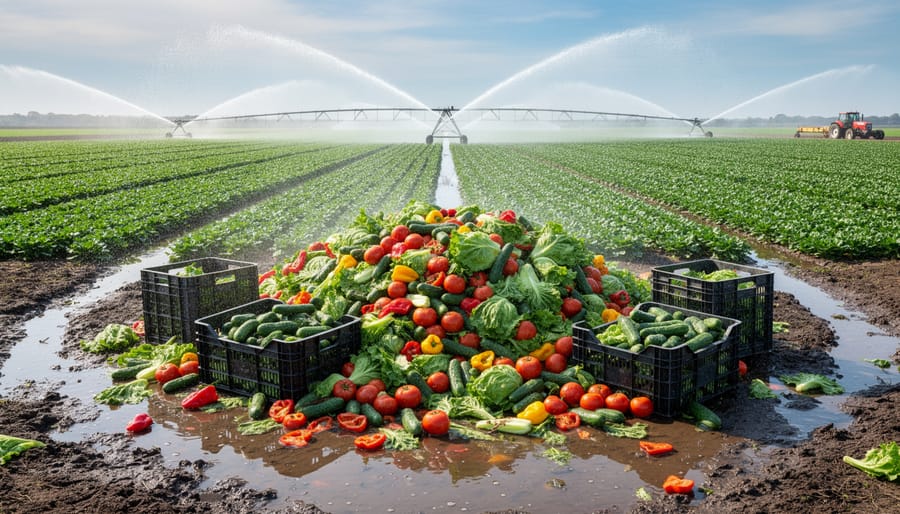
Every time we throw away food, we’re not just wasting what’s on our plate—we’re wasting all the land and natural resources that went into growing it. In Canada, roughly 30% of all food produced never gets eaten, which means we’re clearing forests, plowing fields, and disrupting ecosystems for crops and livestock that ultimately end up in the trash.
Think about it this way: producing food requires space. Lots of it. We need farmland for crops, pastures for livestock, and infrastructure to support it all. Globally, agriculture uses about 40% of Earth’s land surface. When a significant portion of that food goes to waste, we’re essentially destroying habitats and clearing land for nothing.
This connection to deforestation is particularly troubling. As demand for agricultural land increases, forests—especially precious ecosystems like the Amazon and Canadian boreal forests—get cleared to make room for more production. These forests are home to countless species and act as vital carbon sinks. When we waste the food grown on previously forested land, we’ve sacrificed biodiversity and climate stability without even feeding anyone.
The impact extends beyond just clearing land. Intensive farming to meet demand (including demand for food that gets wasted) leads to soil degradation. Healthy soil takes centuries to form, but poor agricultural practices can deplete it in just a few decades. Overfarming strips soil of nutrients, increases erosion, and reduces its ability to support plant life or store carbon.
For Canadian ecosystems, this matters tremendously. Our prairies, wetlands, and grasslands face conversion pressure to agricultural use. When we waste food, we’re contributing to unnecessary pressure on these already vulnerable habitats, threatening native species from pollinators to birds to large mammals.
The good news? By reducing our food waste, we can help decrease the demand for ever-expanding agricultural land, giving ecosystems a fighting chance to recover and biodiversity room to thrive.
Chemical Pollution and Pesticide Impact
When you toss out that wilted lettuce or forgotten container of leftovers, you’re not just discarding food. You’re also throwing away all the agricultural chemicals that went into growing it in the first place. In Canada, where agriculture is a major industry, this hidden impact of food waste deserves our attention.
Modern food production relies heavily on fertilizers and pesticides to maximize crop yields and protect plants from disease and pests. These chemicals require significant energy to manufacture and transport, adding to their environmental footprint before they even reach the field. When we waste food, we’re essentially saying that all those resources and environmental impacts served no purpose.
The consequences extend beyond wasted resources. Fertilizers contain nitrogen and phosphorus compounds that can run off into waterways, contributing to algae blooms that deplete oxygen and harm aquatic life. The pesticides used to protect crops from insects and weeds can persist in soil and water systems long after the growing season ends. When the food produced using these chemicals ends up in the trash, those environmental impacts remain without any benefit.
Consider this: approximately one-third of all food produced globally never gets eaten. That means a third of the fertilizers, pesticides, and herbicides applied to farmland across Canadian provinces have been used for nothing. These chemicals have already affected soil health, water quality, and local ecosystems by the time the food reaches your kitchen.
The good news? By reducing how much food we waste at home, we can actually decrease the demand for chemically intensive farming. Every meal you save from the garbage represents agricultural chemicals that didn’t go to waste. It’s a powerful reminder that our everyday choices about food have ripple effects that extend far beyond our kitchens and back to the fields where our food begins.
The Landfill Problem in Canada
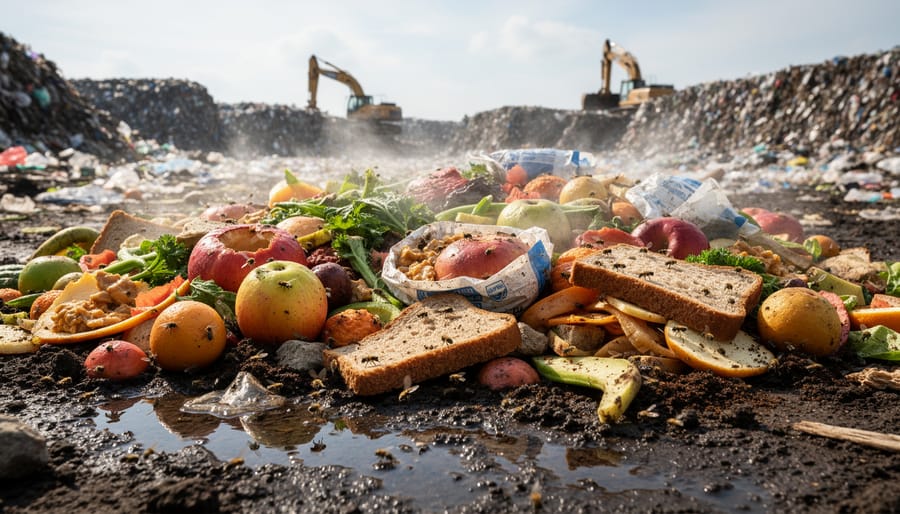
Here in Canada, we’re facing a serious space crunch when it comes to our landfills, and food waste is a major culprit. Currently, food waste makes up about 30% of what ends up in Canadian landfills—that’s roughly 2.2 million tonnes every year. To put that in perspective, we’re essentially burying enough food to fill the Rogers Centre in Toronto several times over, annually.
You might think that organic matter like food would naturally break down in a landfill, but here’s where things get problematic. Landfills aren’t designed like compost bins. When food waste gets buried under layers of other garbage, it’s cut off from the oxygen it needs to decompose properly. Instead, it breaks down through a process that creates methane—that potent greenhouse gas we talked about earlier—along with a toxic liquid called leachate.
Leachate is essentially garbage juice, and it’s as unpleasant as it sounds. As rainwater filters through decomposing food waste and other trash, it picks up all sorts of contaminants, creating a contaminated liquid that can seep into surrounding soil and groundwater if not properly contained. Many older Canadian landfills weren’t built with the sophisticated liner systems we use today, making leachate contamination a real concern for local water sources and ecosystems.
The space issue is equally pressing. Many municipalities across Canada are running out of landfill capacity. Cities like Vancouver and Toronto have already closed multiple landfills and now transport waste to facilities hundreds of kilometers away. This not only costs taxpayers millions of dollars annually but also adds transportation emissions to the environmental burden.
The good news? Food waste is one of the easiest materials to divert from landfills. Unlike other garbage, it can be composted at home, processed through municipal green bin programs, or even prevented in the first place through better meal planning and storage practices. By keeping food waste out of landfills, we’re not just saving space—we’re preventing methane emissions and protecting our local water systems.
Simple Steps You Can Take Today
The good news? You don’t need to overhaul your entire life to make a real difference in reducing food waste. Small, consistent changes in your kitchen can prevent hundreds of kilograms of food from ending up in landfills each year. Here are the most effective strategies you can start using right now:
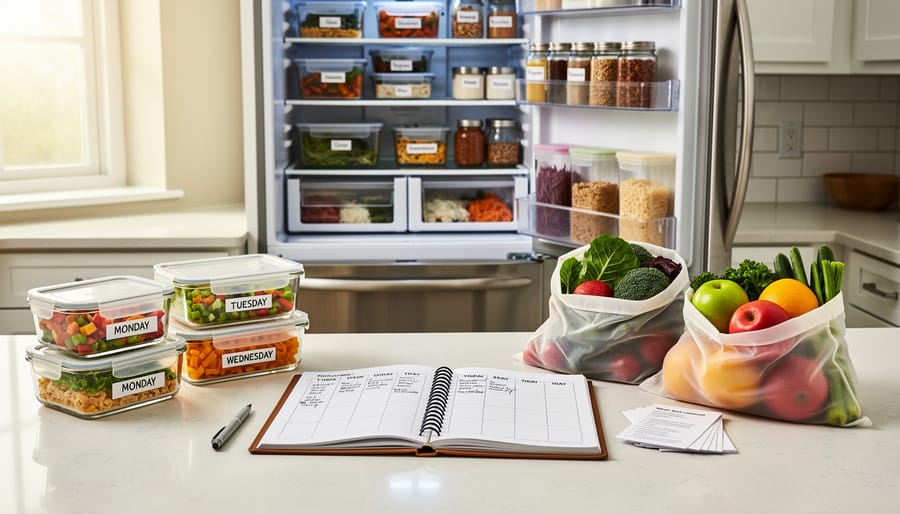
- Plan your meals before shopping. Take ten minutes each week to map out your dinners and make a shopping list based on what you’ll actually cook. Check your fridge and pantry first to avoid buying duplicates.
- Learn what those date labels really mean. “Best before” dates indicate peak quality, not safety. Most foods remain perfectly safe to eat well past this date. Trust your senses—if it looks, smells, and tastes fine, it probably is.
- Master the art of proper storage. Keep your fridge at 4°C or below, store herbs like fresh flowers in water, and wrap cheese in wax paper rather than plastic. Simple tweaks extend freshness dramatically.
- Embrace your freezer as a waste-prevention tool. Freeze extra bread, overripe bananas for smoothies, vegetable scraps for stock, and leftovers you won’t eat within a few days. Label everything with dates so you actually use what you’ve saved.
- Get creative with leftovers and scraps. Vegetable peels and ends make excellent stock. Stale bread becomes croutons or breadcrumbs. That half-can of tomato paste? Freeze it in ice cube trays for future recipes.
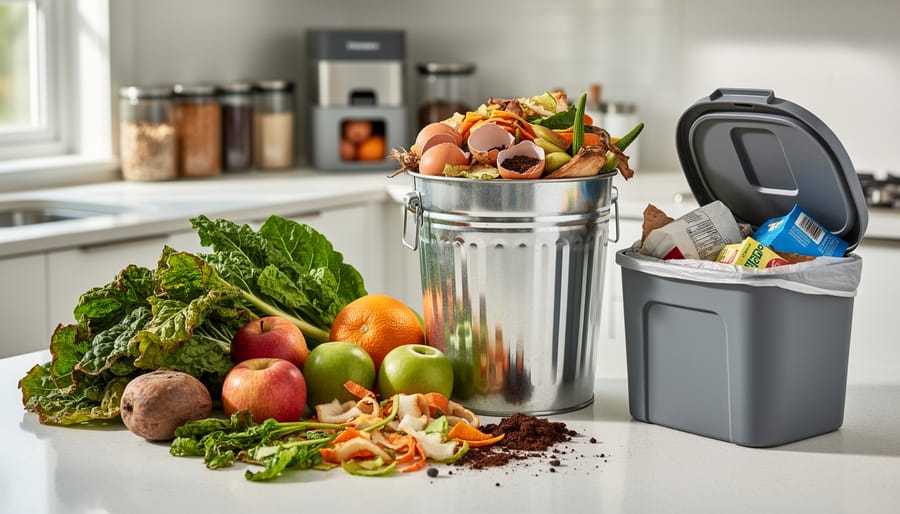
Beyond these foundational habits, consider starting a simple composting system. Even apartment dwellers across Canada now have options, from municipal green bin programs to compact countertop composters. Composting diverts organic waste from landfills where it would produce methane, instead turning it into nutrient-rich soil.
Another game-changer is understanding portion sizes. We often cook and serve more than we need. Start with smaller portions and allow for seconds. It’s easier to cook a bit more than to rescue food that’s already been plated and left uneaten.
Keep a “use first” bin in your fridge for items approaching their best-before dates or produce that’s getting soft. Making these foods visible means you’re more likely to incorporate them into meals before they go bad.
Finally, track your waste for one week. You might be surprised by patterns—maybe you consistently overbuy salad greens or forget about that bottom produce drawer. Awareness is powerful. Once you identify your personal waste hotspots, you can adjust your habits accordingly.
Remember, perfection isn’t the goal. If every Canadian household prevented just one meal’s worth of food from being wasted each week, we’d collectively keep thousands of tonnes out of landfills annually. Your efforts matter more than you think, and these simple steps prove that being environmentally responsible doesn’t require sacrifice—just a bit of mindfulness and planning.